Blow-fill-seal (BFS) technology continues to expand in pharmaceutical packaging. According to incomplete statistics, over 800 BFS machines were operating in China by 2025, consuming approximately 75,000 tons of medical polypropylene annually. However, most manufacturers keep only one or two approved grades on their material list. When an imported grade faces price hikes or supply disruptions, finding a replacement often fails due to mismatched processing windows or incomplete certifications.
From actual sourcing cases, four PP grades dominate the BFS infusion bottle and ampoule market: Hyosung TOPILENE® R530A, LyondellBasell Purell RP270G, Sinopec B4902, and Petrochina RPE02M. LyondellBasell commands the highest price – roughly 35% above Hyosung – while the two domestic grades are more cost-effective. Can these four replace each other? On paper, the physical properties look similar. In practice, three dimensions determine success: melt flow window, sterilization compatibility, and certification scope.
Two Critical Requirements for BFS Polypropylene Selection
BFS equipment processes polypropylene differently from conventional injection molding. The machine continuously extrudes a parison, then forms, fills, and seals the container in one cycle. The polymer experiences high shear and short residence time. Using the wrong material leads to immediate problems: hazy bottles, stringing at the seal, or deformation after sterilization.
First requirement: Melt flow rate must match the equipment window. Most BFS lines (Rommelag, Bosch, etc.) specify an MFR between 1.5 and 2.8 g/10min (230°C/2.16kg). Below 1.5, extrusion pressure becomes too high and the parison droops unevenly. Above 2.8, the parison flows excessively, causing pinched seals. All four grades fall inside this range – Hyosung TOPILENE® R530A at 2.0, LyondellBasell Purell RP270G at 1.8, Sinopec B4902 at 2.3, and Petrochina RPE02M with a range of 1.3–2.7. However, Petrochina RPE02M batch variation can reach ±0.4. Procurement teams should request the COA for each specific lot.
Second requirement: Sterilization method determines material suitability. Infusion bottles and ampoules are typically sterilized by autoclave (121°C, 15-30 minutes). Some products use ethylene oxide (EO) or gamma irradiation. LyondellBasell Purell RP270G is explicitly certified for both autoclave and EO sterilization. Hyosung TOPILENE® R530A and Sinopec B4902 are designed for autoclave. Petrochina RPE02M is described as “high-temperature sterilization resistant” – specific EO or gamma data should be requested from the supplier. If your product requires EO sterilization, prioritize LyondellBasell Purell RP270G or ask the domestic supplier for validated EO test reports.
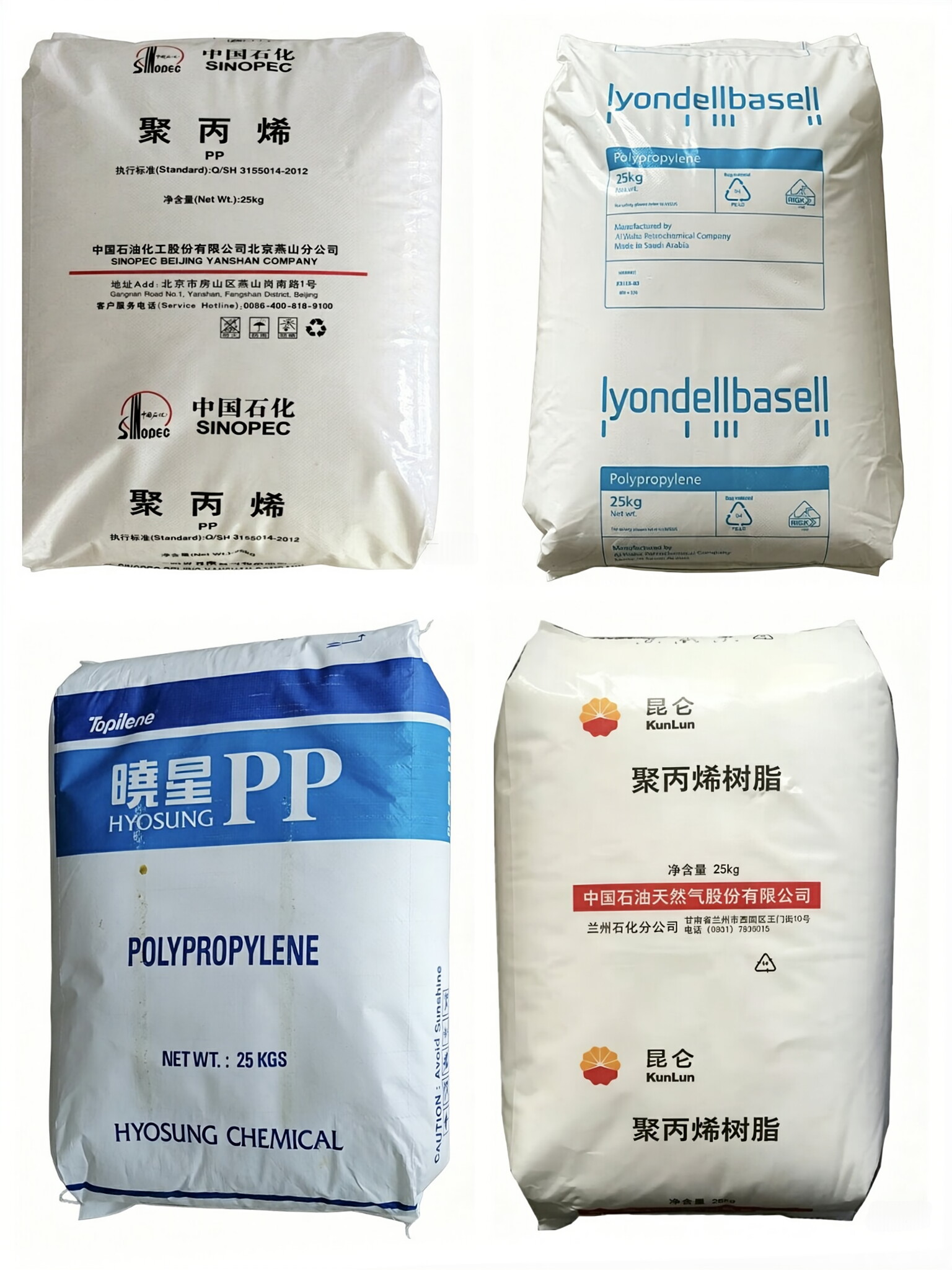
Side-by-Side Parameter Comparison and Cost Tiers
The table below consolidates data from manufacturer technical datasheets and third-party test reports.
| Parameter | Hyosung TOPILENE® R530A | LyondellBasell Purell RP270G | Sinopec B4902 | Petrochina RPE02M |
|---|
| MFR (g/10min) | 2.0 (ASTM) | 1.8 (ISO) | 2.3 (GB/T) | 1.3–2.7 (GB/T) |
| Tensile yield (MPa) | 27.45 | 25.0 | 26.5 | ≥20 |
| Flexural modulus (MPa) | 931 | 950 | 810 | ≥700 |
| Notched impact 23°C | 8 kJ/m² (Izod) | 20 kJ/m² (Charpy) | 8.0 kJ/m² (Charpy) | ≥5.0 kJ/m² (Charpy) |
| Transparency/gloss | High gloss (110) | Moderate clarity | High clarity | Good |
| Certifications | DMF, FDA, USP VI, EP3.1.6 | EP3.1.6, USP VI | YY/T0242, EP, USP, FDA | YY/T0242, USP VI, FDA, RoHS |
| Cost tier | Mid | Highest (+35% vs Hyosung) | Domestic | Domestic |
From field experience: Hyosung TOPILENE® R530A excels in transparency and gloss, making it a common choice for oral liquid bottles and ampoules where product visibility matters. LyondellBasell Purell RP270G offers significantly higher impact strength (20 vs ~8 kJ/m²) – useful for large infusion bottles that must survive transport, though often over-specified for standard BFS. Sinopec B4902 has a strong reputation for batch consistency; Sinopec Yanshan has produced this grade for over ten years, and it is mature for injection-blow one-step processes. Petrochina RPE02M stands out for its broad certification portfolio, including USP Class VI, FDA, RoHS, and a biocompatibility report from the National Institutes for Food and Drug Control, and was specifically developed for BFS integrated processes.
One detail often overlooked: LyondellBasell Purell RP270G has lower tensile strength (25 MPa) than Hyosung TOPILENE® R530A (27.45 MPa) – about 9% lower – yet slightly higher flexural modulus (950 vs 931 MPa). This indicates higher room-temperature rigidity. An injection molding engineer reported stress whitening at the bottle bottom after switching from Hyosung TOPILENE® R530A to LyondellBasell Purell RP270G; the issue was resolved by lowering extrusion temperature by 5-8°C. Trial runs are essential before any material changeover.
Three Common Sourcing Mistakes and How to Avoid Them
Mistake 1: Assuming identical certifications guarantee identical performance. One pharmaceutical company used a dual-certified (USP VI + EP) imported PP for two years. To reduce costs, they switched to another dual-certified domestic grade. After autoclaving, bottle haze increased from 12% to 23%, and the rejection rate doubled. The root cause was different nucleating agent systems – crystallization kinetics differed, altering spherulite size and haze. Recommendation: When evaluating alternatives, run internal trials that include optical property measurement before and after sterilization, and verify that haze meets the YY/T 0242-2007 requirement of ≤15%.
Mistake 2: Ignoring batch-to-batch variation in gels and black specks. BFS equipment is highly sensitive to unmelted particles. A single 0.3 mm gel particle can block a filling needle or cause a leaking seal. Imported grades (LyondellBasell and Hyosung) traditionally have tighter control over screen pack mesh sizes during polymerization. However, domestic grades have improved significantly – Sinopec B4902 and Petrochina RPE02M now achieve an incoming inspection pass rate above 98% at major pharmaceutical packaging manufacturers. Recommendation: Specify an internal control standard in your quality agreement, for example “black specks ≤5 pieces per kilogram, particle size ≤0.5 mm.”
Mistake 3: Overlooking long-term thermal stability. BFS lines often run continuously for 24-48 hours. The polymer sits in the hopper and screw barrel under prolonged thermal exposure. Some antioxidant systems are designed for short-cycle processing; under extended heat, they degrade and release low-molecular-weight compounds that can contaminate the filling system. A practical metric is Oxidative Induction Time (OIT), measured by ASTM D3895 or ISO 11357-6. OIT indicates how long the material resists oxidation at elevated temperature. A medical PP with an OIT above 20 minutes at 200°C demonstrates strong resistance to thermal degradation – well-suited for long-run BFS production. Recommendation: Request OIT test reports from your supplier.
Conclusion
For high-budget projects targeting Western markets that require both EP and USP certifications, LyondellBasell Purell RP270G remains the safest choice – but plan for additional process tuning. When transparency and batch stability are top priorities for domestic or Asian markets, Hyosung TOPILENE® R530A offers better value than LyondellBasell while delivering superior gloss. For cost-sensitive large-volume infusion bottles qualified under YY/T0242, the domestic grades Sinopec B4902 and Petrochina RPE02M perform reliably. Sinopec B4902 is well-suited for injection-blow one-step machines, while Petrochina RPE02M carries a more complete set of international certifications.
No material change should skip the three essential validation steps: small-batch trial production → sterilization validation → accelerated aging study. Replacing a resin based solely on a datasheet is the most expensive shortcut on any BFS production line.
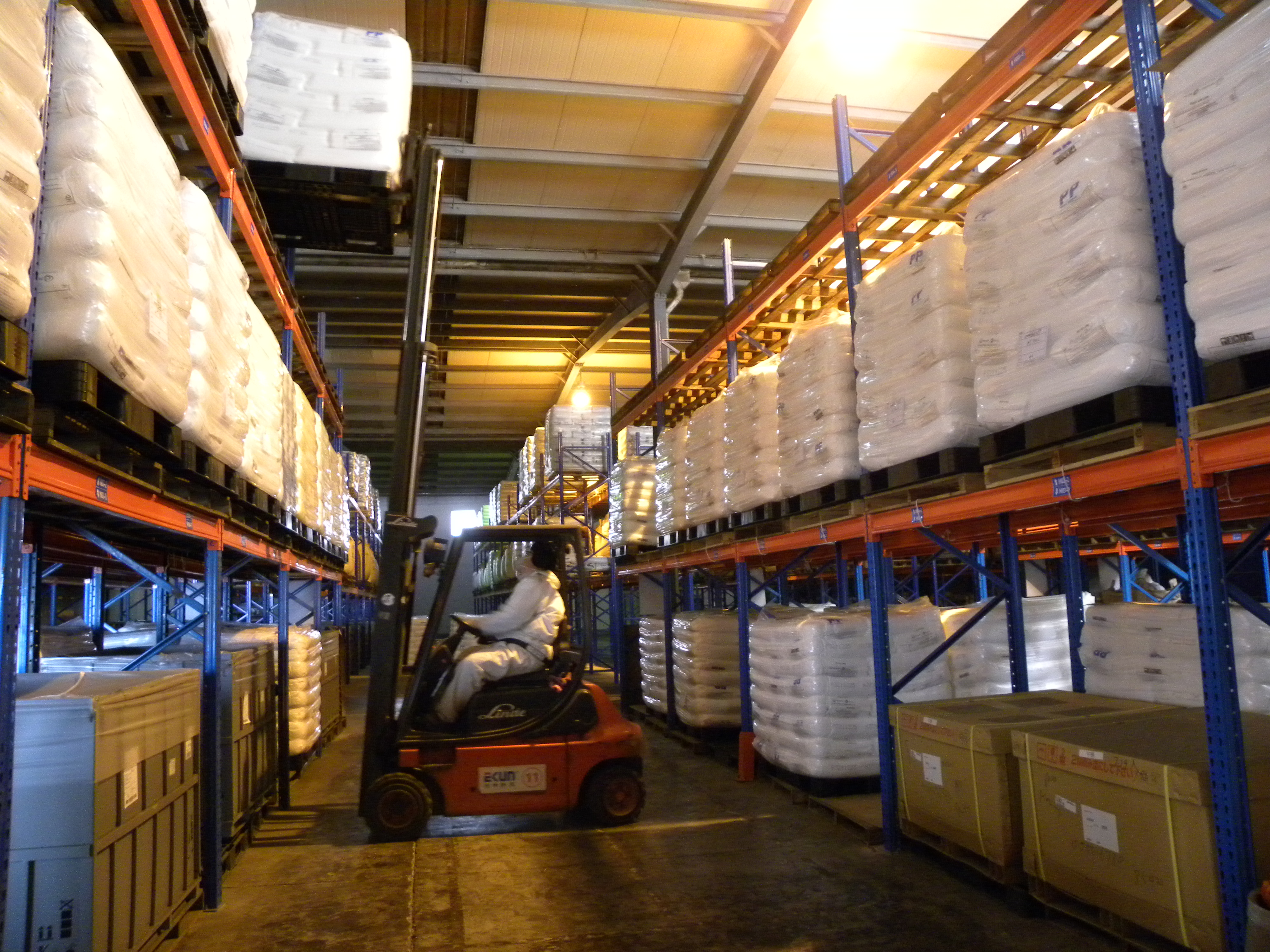
Qingdao Prime Union Trade Co., Ltd. has over 20 years of experience distributing engineering plastics. As an authorized distributor for Hyosung, and with direct supply channels to LyondellBasell, Sinopec, and Petrochina, we stock these four medical PP grades across six warehouses in China, supporting bonded, processing, and general trade. Our in-house modification facility, Qingdao Meitai Plastics, can also tailor formulations for specific needs. For technical datasheets, compliance documentation, or trial samples, please contact our engineering plastics team – we are ready to help you assess replacement risks and optimize your BFS material strategy.


 English
 Korean