
 English
 Korean


Medical PP BFS Processing: Hyosung R530A vs LyondellBasell Purell RP270G
QYResearch data shows the global medical polypropylene market reached US$452 million in 2024 and is projected to reach US$768 million by 2031, a compound annual growth rate of 7.8%. Blow-fill-seal (BFS) aseptic technology continues to expand in pharmaceutical packaging, driving demand for IV bottles, ampoules, and ophthalmic containers. Medical PP BFS processing demands materials that remain stable through extrusion, forming, filling, and sealing in a continuous short cycle, while also withstanding terminal sterilization. Hyosung R530A and LyondellBasell Purell RP270G are two random copolymer grades frequently evaluated for these applications. This article compares their key properties, processing windows, and certification profiles. The goal is to help engineers and procurement teams shorten material qualification cycles and avoid common line trials that fail due to melt flow or sterilization mismatches.
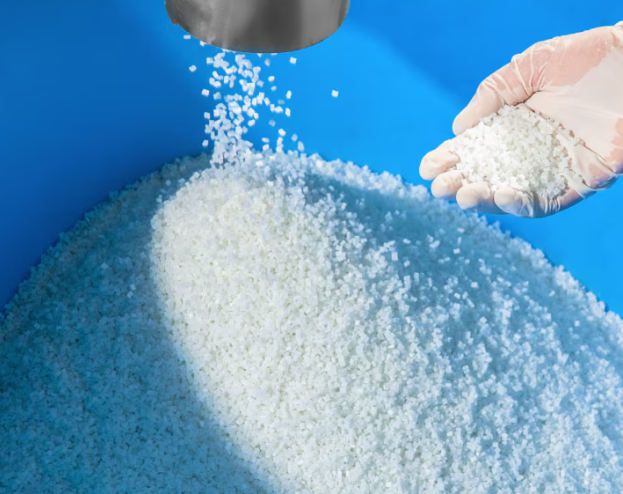
Why BFS Demands More Than Standard Medical PP
BFS equipment completes tube extrusion, container forming, filling, and sealing within seconds. The melt flow index (MFI) directly affects parison stability. Based on mainstream equipment recommendations, BFS polypropylene melt flow typically falls between 1.5 and 2.8 g/10min at 230°C/2.16kg. R530A has a typical value of 2.0, while RP270G is 1.8. Both sit in the mid-range.
From our experience supplying medical device manufacturers, an MFI below 1.5 g/10min raises extrusion pressure and can cause rough or bamboo-like parison surfaces. An MFI above 2.8 g/10min accelerates parison sag, increasing the risk of pinch-off stringing and seal defects.
Sterilization method is equally critical. High-pressure steam at 121°C demands sufficient heat resistance. Ethylene oxide (EO) operates at lower temperatures but introduces residue control complexity. R530A has a Vicat softening temperature of 130°C (10N) and a heat deflection temperature of 95°C at 0.45 MPa. RP270G shows a Vicat softening temperature of 136°C (A50) and a heat deflection temperature of 72°C at 0.45 MPa.
These values come from different test standards—ASTM for R530A and ISO for RP270G—so they cannot be directly equated. Engineers should validate actual sterilization performance using bottle wall thickness and specific steam curves. A practical rule: if the BFS line runs high-speed with thin walls, prioritize melt strength and cooling efficiency over raw heat resistance numbers.
R530A vs RP270G: Property and Certification Comparison
Medical grade polypropylene selection benefits from a side-by-side data view. The table below summarizes typical values from the suppliers’ technical data sheets. These are reference values, not specifications.
| Property | Hyosung R530A | LyondellBasell RP270G |
|---|---|---|
| MFI (230°C/2.16kg) | 2.0 g/10min | 1.8 g/10min |
| Density | 0.90 g/cm³ | 0.90 g/cm³ |
| Tensile strength at yield | 290 kg/cm² | 25 MPa |
| Flexural / tensile modulus | 9,000 kg/cm² | 1,000 MPa |
| Notched impact at 23°C | 8.0 kg·cm/cm (Izod) | 20 kJ/m² (Charpy) |
| Vicat softening temperature | 130°C (10N) | 136°C (A50) |
| Certification profile | EP §3.1.6, USP Class VI, FDA DMF No. 21499, phthalate-free | Medical applications listed; steam and EO sterilizable; consult PSB and SDS for current regulatory status |
R530A offers higher tensile strength and flexural modulus, which can benefit bottle rigidity. Its certification file is explicit, including EP §3.1.6, USP Class VI, and FDA DMF listing. RP270G shows higher notched impact strength at 20 kJ/m², a useful property for drop-test performance in larger IV bottles.
Engineers should note that unit differences and test method variations mean direct substitution requires validation. From our experience, switching between these grades without re-testing seal strength and post-sterilization dimensions can lead to unexpected line rejections. A practical step is to run a 30-minute MFI check on incoming batches and compare against the certificate of analysis.
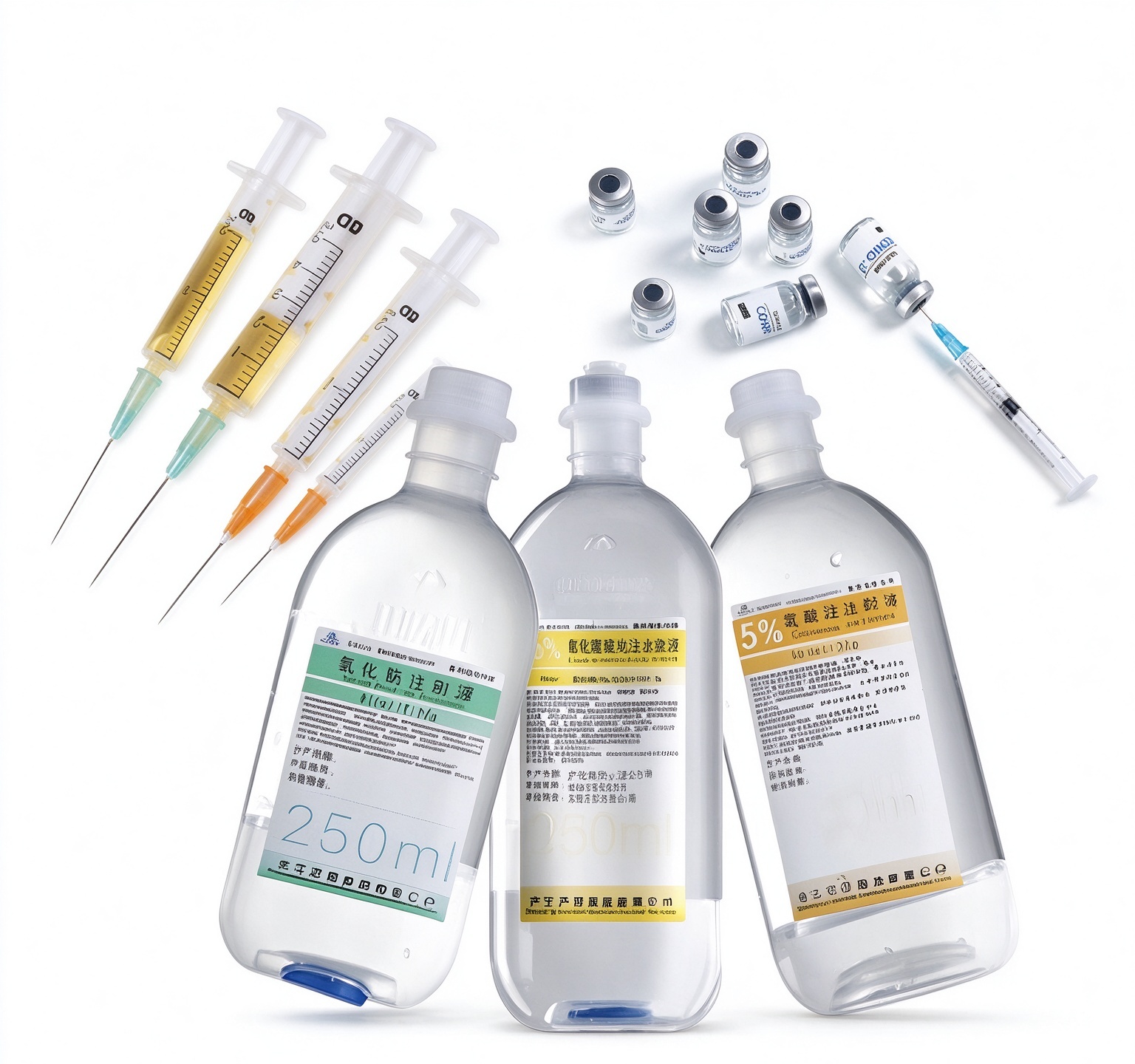
Certification and Standards: What BFS Products Must Meet
For BFS medical polypropylene, certification is not optional. In China, YY/T 0242-2007 “Polypropylene specific material for medical infusion, transfusion, and injection instruments” is the core reference. Implemented on March 1, 2008, it sets requirements for melt mass flow rate, Izod notched impact strength, haze, n-hexane extractables, and heavy metals. For PP-H, Izod notched impact must be at least 2.0 kJ/m²; for PP-R, at least 3.0 kJ/m². Haze for injection instruments must not exceed 15%. Heavy metal content is capped at 1.0 μg/mL.
For export markets, USP Class VI medical PP is a common requirement. R530A explicitly lists USP Class VI and EP §3.1.6 compliance. RP270G lists medical applications but directs users to its Product Stewardship Bulletin and Safety Data Sheet for current regulatory status. This difference matters during regulatory filing.
Data from third-party testing laboratories shows that USP Class VI and ISO 10993 are separate systems. USP Class VI covers material-level biocompatibility tests: systemic toxicity, intracutaneous reactivity, and implantation. ISO 10993 is a risk-based framework for final device evaluation. Passing USP Class VI does not automatically mean ISO 10993 compliance. For products targeting both Chinese registration and overseas markets, we recommend compiling YY/T 0242-2007 test data and USP Class VI certificates into one technical dossier early in the validation phase.
Processing Window and Supply Chain Considerations
BFS polypropylene processing window depends on screw design, heating efficiency, and product wall thickness. R530A’s TDS provides a complete BFS profile: feed zone 160–180°C, melting zone 180–225°C, metering zone 180–250°C, die/nozzle 180–250°C, mold 180–220°C, screw speed 15–50 rpm, and blowing pressure 90 psi. RP270G does not list a specific temperature curve, but its 1.8 g/10min MFI suggests a similar window. Start from mid-range supplier recommendations and adjust based on parison sag, seal cut quality, and wall thickness distribution.
Drying and storage also affect defect rates. R530A recommends storage below 40°C, protected from UV. When condensation is visible or expected, pre-dry at 80–100°C for 2–4 hours under air circulation. From our experience supplying BFS converters, moisture exposure often produces bubbles or silver streaks in transparent bottles, especially in humid climates.
Supply chain reliability is a practical concern for medical PP. Over the past two decades, we have seen demand for medical-grade polypropylene fluctuate with regulatory changes and sterilization trends.
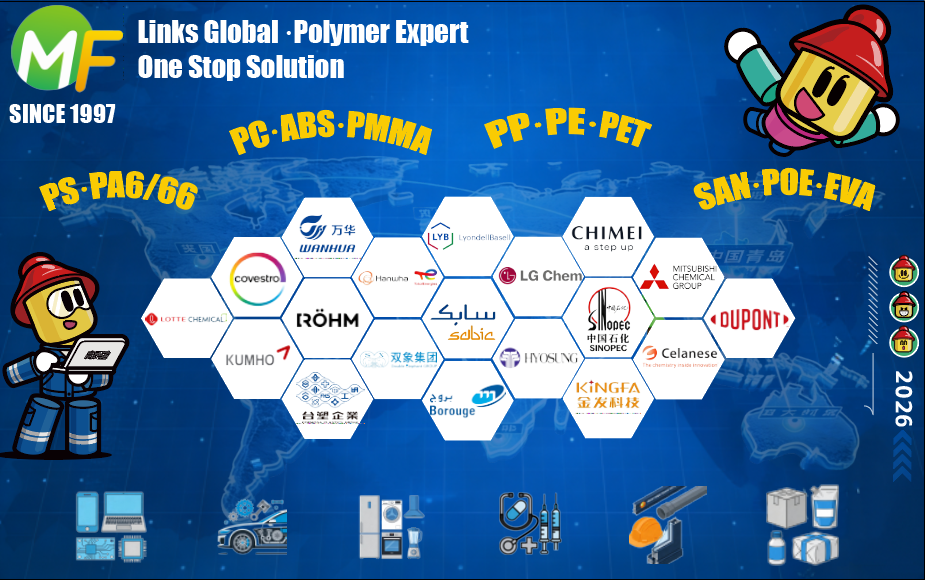
Global Distribution Network
Our organization, Qingdao Prime Union Trade Co., Ltd., maintains long-term distribution relationships with Hyosung, SABIC, Hanwha Total, and Chimei, and supports general trade, processing trade, and bonded transfer operations.
Modification & Color Compounding
Our sister company, Qingdao Primetech Plastics Co., Ltd., provides modification and color compounding for PC, ABS, PP, PA, PBT, and other engineering plastics.
Fast Sampling & Delivery
For medical color masterbatch and base modifications, standard colors and base modifications can be sampled in 3 days and delivered in 7 days. Samples are paid and credited against future orders.
Integrated Supply Chain
This integrated structure allows engineers to move from standard medical PP grades to functional modifications—toughening, filling, alloying, flame retardancy, or custom coloring—while keeping the same supply chain contact.
Conclusion
Medical PP BFS processing demands a balance between melt flow stability, sterilization compatibility, and certification completeness. R530A and RP270G both sit in the common MFI range, with R530A offering higher rigidity and a clear certification file, while RP270G provides higher notched impact strength. Engineers should validate material performance on their specific BFS line, not rely solely on TDS values. As medical device regulations tighten and BFS adoption grows, early integration of material testing and regulatory documentation will shorten time-to-market. For projects requiring functional modifications beyond standard grades, working with a supplier that also operates a compounding facility can reduce iteration cycles and keep material traceability intact.
Confirm MFI falls within the equipment’s recommended window.
Verify sterilization compatibility with actual bottle geometry.
Collect YY/T 0242-2007 and USP Class VI documents for regulatory filing.
Run a trial batch and record parison stability, seal strength, and post-sterilization dimensions.