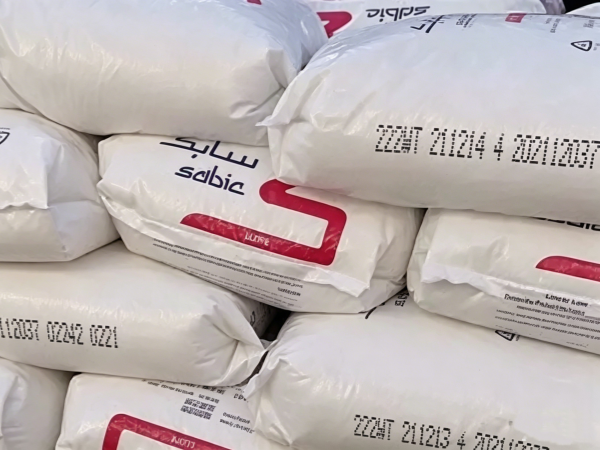
SABIC® LLDPE 222WT – Technical Overview for Blown Film Converters
The global LLDPE market continues to expand, driven by sustained demand for flexible packaging solutions. According to LP Information, the global LLDPE Plastic Films and Sheets market was valued at approximately USD 40.57 billion in 2025 and is projected to reach USD 48.71 billion by 2032, growing at a CAGR of 2.7%. The Asia-Pacific region accounts for over 45% of global LLDPE consumption, fueled by rapid industrialization and expanding food processing sectors in China and India. Polyethylene films remain the dominant material in flexible packaging, valued for their superior flexibility, cost efficiency, and compatibility with modern high-speed packaging lines.
Within this growing market, film converters and packaging manufacturers face increasing pressure to balance throughput, film quality, and material cost. Resin selection directly impacts these variables. SABIC® LLDPE 222WT – an ethylene-butene copolymer designed for blown film applications – addresses this balance through a specific combination of melt flow characteristics, additive packages, and mechanical properties.
Based on our experience supplying engineering plastics to manufacturers across packaging, automotive, and consumer goods sectors, we have observed that material selection errors often trace back to mismatches between resin specifications and actual line conditions or end-use requirements. This article provides a technical examination of SABIC LLDPE 222WT to support informed procurement and formulation decisions.
Melt Index and Processability – Why 1.9 g/10 min Matters
SABIC LLDPE 222WT has a Melt Flow Rate (MFR) of 1.9 g/10 min at 190°C / 2.16 kg, measured per ASTM D1238. This places it in the mid-range for blown film resins – neither a fractional melt (below 1.0) typically used for heavy-duty films, nor a higher-flow grade (above 3.0) more common in injection molding or cast film.
In blown film extrusion, melt index directly correlates with:
Extruder motor load – lower MFR increases torque requirements
Melt strength – influences bubble stability, especially at higher blow-up ratios
Output rate – higher MFR generally enables faster throughput
The 1.9 MFR of 222WT provides a practical balance. It generates sufficient melt strength to maintain bubble stability at blow-up ratios between 2.0 and 3.0 – the recommended range per SABIC's processing guidelines – while allowing reasonable extrusion rates. Barrel temperatures of 190–220°C are typical.
A common error we encounter in the field is selecting a resin based solely on price or availability without verifying melt index compatibility with existing screw designs and die geometries. For lines optimized for 1.5–2.5 MFR resins, 222WT processes with minimal adjustment. However, lines designed for higher-flow grades may require screw speed or temperature modifications to achieve optimal output and gauge control.
Density is specified at 922 kg/m³ (0.922 g/cm³) at 23°C per ASTM D1505. This is typical for LLDPE and contributes to the film's stiffness and tensile properties while maintaining the flexibility associated with lower-density polyethylenes.
High Slip and Antiblock – Enabling High-Speed Packaging Lines
One of the defining characteristics of 222WT is its formulation: the resin contains both high slip agent and high antiblock additive. These additives are not incidental – they are engineered responses to specific production-line challenges.
Slip agents reduce the coefficient of friction (COF) between film surfaces and between film and metal processing equipment. In high-speed automatic packaging lines – vertical form-fill-seal (VFFS) and horizontal form-fill-seal (HFFS) systems – low COF is critical for:
Smooth film unwinding from rolls
Consistent film travel over forming collars and sealing jaws
Reduced film drag and tear during high-speed indexing
Antiblock additives create microscopic surface roughness that prevents adjacent film layers from adhering to each other. Without antiblock, film layers can fuse during storage or under pressure (e.g., on a roll), leading to:
Data from industry studies confirms that slip and antiblock agents are commonly used to prevent films from adhering to each other and to metal rollers. The synergistic relationship between these additives is well-documented: slip agents provide surface lubrication, while antiblock agents create physical separation between layers.
From a procurement perspective, 222WT is a "pre-compounded" solution – the additives are incorporated at the resin manufacturing stage, eliminating the need for downstream masterbatch addition. This reduces variability, simplifies inventory management, and ensures consistent additive dispersion. However, it also means the additive package cannot be adjusted for specific applications; converters needing non-standard slip or antiblock levels should consider base resins without additives (such as SABIC 222WJ) and compound in-house.
Mechanical Property Profile – Data-Driven Performance Assessment
SABIC's technical data sheet provides mechanical property values measured on 30 μm film produced at 2:1 blow-up ratio using 100% 222WT. These values offer a reliable benchmark for performance comparison.
Tensile Properties (ASTM D882):
| Property | MD | TD |
|---|
| Stress at Yield | 10 MPa | 10 MPa |
| Stress at Break | 31 MPa | 23 MPa |
| Elongation at Break | 450% | 600% |
Optical and Impact Properties:
| Property | Value | Test Method |
|---|
| Gloss 45° | 50 | ASTM D2457 |
| Haze | 16% | ASTM D1003 |
| Dart Impact F50 | 112 g | ASTM D1709 |
The tensile data reveals several points. First, the yield stress is identical in both machine and transverse directions (10 MPa), indicating balanced orientation at 2:1 BUR. Second, the break stress differential (31 MPa MD vs. 23 MPa TD) is typical for blown films where molecular orientation is stronger in the machine direction. Third, elongation at break (450% MD, 600% TD) confirms the resin's ductility – important for applications requiring stretch before failure, such as refuse bags or stretch hood films.
The dart impact value of 112 g (F50) represents the weight at which 50% of tested film samples fail under a falling dart. This is a measure of film toughness and puncture resistance. For context, many general-purpose LLDPE blown films at similar gauge and BUR achieve 80–120 g in this test, placing 222WT in the upper range of its category.
Haze at 16% and gloss at 50 indicate moderate optical clarity. This is not a high-clarity film – resins with lower haze (8–12%) are available for applications requiring transparency. However, for applications where optical properties are secondary to mechanical performance and processing efficiency, 222WT's optical profile is acceptable.
Application Mapping – Where 222WT Delivers Value
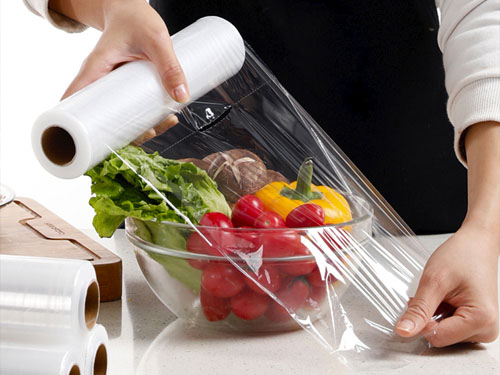
SABIC lists the following typical applications for 222WT: cloth bags, carrier bags, thin layer coating, refuse bags, meat packaging, other food packaging or lamination film, and general-purpose consumer packaging.
Based on field experience and material performance data, we map these applications to specific property requirements:
| Application | Critical Properties | 222WT Suitability |
|---|
| Carrier bags / T-shirt bags | Tensile strength, tear resistance, high-speed sealing | High – 31 MPa MD tensile, good sealability |
| Refuse bags | Dart impact, puncture resistance, elongation | High – 112 g dart, 600% TD elongation |
| Meat packaging | Puncture resistance, sealing, FDA compliance | High – pending food contact verification |
| Lamination film | Adhesion compatibility, surface properties | Moderate – slip agents may affect adhesion |
| Thin layer coating | Processability, gauge control | High – 1.9 MFR supports thin-gauge extrusion |
A point worth emphasizing: the slip and antiblock package that makes 222WT effective for automatic packaging lines can be a disadvantage in lamination applications. Slip agents migrate to the film surface and can reduce bond strength with adhesives or inks. Corona treatment can mitigate this, but converters should conduct adhesion testing before committing to large-scale lamination runs.
From a food packaging perspective, SABIC recommends contacting local sales or technical representatives for specific food regulation details. While LLDPE is generally recognized as safe for food contact under FDA regulations (21 CFR 177.1520), the additive package in 222WT may have specific usage limitations. Procurement professionals should request the current food-contact compliance documentation for their target region.
Selection Considerations – 222WT vs. 222WJ and Storage Guidelines
SABIC offers multiple grades in the 222 series, and confusion between them is common. The two most frequently compared are:
SABIC LLDPE 222WT – contains high slip and high antiblock
SABIC LLDPE 222WJ – contains high levels of both slip agent and antiblock, with a relatively high MFR for easy processing
The key distinction appears to be in the specific additive types and levels, as well as regional availability (222WT is marketed for Asia, while 222WJ serves Africa & Middle East). Both are ethylene-butene copolymers designed for blown film. Converters should obtain the precise technical data sheet for their region to confirm differences in additive levels, optical properties, or processing recommendations.
Storage and handling considerations – SABIC advises storing polyethylene resin away from direct sunlight and heat, in a dry area preferably not exceeding 50°C. The company recommends processing PE resin within 6 months of delivery, noting that poor storage conditions may lead to quality deterioration including color change, odor, and inadequate product performance.
In practice, we have observed that slip agent performance can degrade over time, especially in warm or humid storage. The slip agent – typically a primary amide such as erucamide or oleamide – migrates to the film surface over time. While this migration is essential for the slip function, excessive or premature migration (due to high storage temperatures) can lead to inconsistent COF or even surface contamination. Film converters should plan inventory turnover accordingly and monitor COF on incoming resin lots.
Conclusion
SABIC LLDPE 222WT offers a specific value proposition for blown film converters: a mid-flow resin with pre-compounded high slip and antiblock additives, delivering balanced mechanical properties suitable for a range of packaging applications. Its 1.9 MFR supports stable processing at 2.0–3.0 BUR, while tensile strength (31 MPa MD), dart impact (112 g), and elongation (600% TD) meet the demands of carrier bags, refuse bags, and food packaging films.
The resin's additive package is both its strength and its limitation – it enables high-speed automatic packaging but may require surface treatment for lamination or printing applications. Procurement decisions should weigh these factors against specific line conditions and end-use requirements.
Based on our experience working with film converters across Asia, the most successful implementations of 222WT involve:
Verification of melt index compatibility with existing extruder screw designs
COF testing on production films to confirm slip performance
Storage conditions that maintain additive efficacy
Food-contact compliance documentation for regulated applications
As the LLDPE packaging film market continues its steady growth trajectory – with the polyethylene films segment holding the largest share in flexible packaging – informed resin selection remains a competitive differentiator. SABIC LLDPE 222WT represents one viable option within a broader portfolio, and its fit depends on the specific technical and operational requirements of each converting line.

 English
 Korean