
 English
 Korean


Polycarbonate/acrylonitrile-butadiene-styrene (PC/ABS) blends combine the heat resistance and impact strength of PC with the processability of ABS, making them one of the most widely used engineering plastic alloys globally. According to a 2026 report by QYResearch, the global PC/ABS market was valued at approximately USD 4.97 billion in 2025 and is projected to reach USD 6.60 billion by 2032, driven by lightweighting in automotive and miniaturization in electronics. The China Plastics Processing Industry Association also reported that the revenue of China’s plastics industry exceeded RMB 2.2 trillion in 2025, with engineering plastics accounting for a growing share.
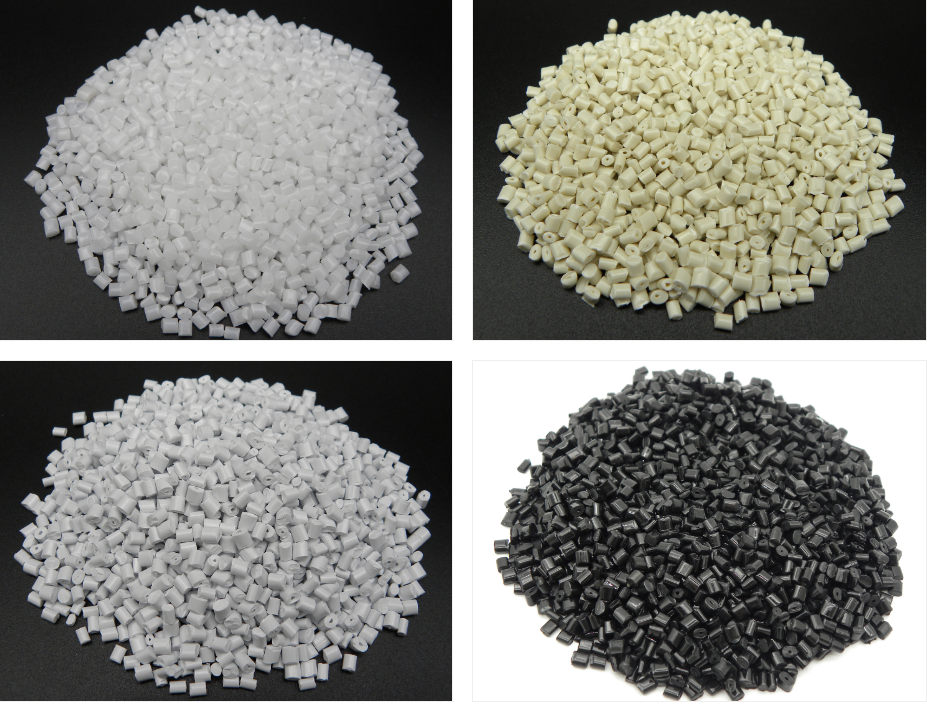
For engineers and R&D professionals, the key challenge is not finding a “good” PC/ABS, but selecting the optimal PC/ABS alloy for a specific design. Over the past 20 years, we have supplied these materials to manufacturers across automotive, electronics, and industrial sectors, and we have observed that many failures stem from mismatched properties – especially when PC content is overlooked. This article provides a data-driven comparison of three commercially available grades (HI5330, HI5345, and HI5365) to help you align material performance with real-world demands. We also include practical processing tips derived from our experience at Qingdao Prime Union Trade Co., Ltd., a distributor with over two decades in engineering plastics and direct partnerships with major producers like Chimei, SABIC, Hanwha Total, and Hyosung.
1. Introduction: The Growing Demand for PC/ABS Alloys
Polycarbonate/acrylonitrile-butadiene-styrene (PC/ABS) blends combine the heat resistance and impact strength of PC with the processability of ABS, making them one of the most widely used engineering plastic alloys globally. According to a 2026 report by QYResearch, the global PC/ABS market was valued at approximately USD 4.97 billion in 2025 and is projected to reach USD 6.60 billion by 2032, driven by lightweighting in automotive and miniaturization in electronics. The China Plastics Processing Industry Association also reported that the revenue of China’s plastics industry exceeded RMB 2.2 trillion in 2025, with engineering plastics accounting for a growing share.
2. How PC Content Dictates Performance in PC/ABS Blends
PC/ABS is not a simple additive mixture; its properties depend on the ratio of the two phases, interfacial adhesion, and morphology. In general, increasing PC content raises tensile strength and heat deflection temperature (HDT), but reduces melt flow. Conversely, higher ABS content improves toughness (due to the rubbery butadiene phase) and flowability. Studies have shown that when the PC/ABS ratio reaches about 70/30, tensile strength reaches a maximum, as PC forms a continuous matrix and ABS domains are finely dispersed.
For general-purpose PC/ABS alloys, PC content typically ranges from 30% to 70%. At 30% PC, the alloy behaves more like ABS with enhanced heat resistance; at 70% PC, it approaches polycarbonate's rigidity. This directly influences three critical parameters: strength (tensile and flexural), thermal performance (HDT), and processability (melt index). The selection process is essentially a trade-off among these three. For instance, if you need electroplating capability – common for automotive exterior trim – you might consider an electroplating-grade PC/ABS, which offers better metal adhesion than electroplated ABS while maintaining good toughness. Although electroplating grades are specially formulated, understanding the base alloy's PC content helps predict adhesion and thermal stability during plating.
3. Side-by-Side Comparison of Three Typical Grades
The following data are based on ISO standard tests, with test bars conditioned at 23°C and 50% RH for 24 hours before measurement. All three grades are UL-94 HB rated, making them suitable for non-flame-retardant applications.
| Property | Unit | HI5330 | HI5345 | HI5365 |
|---|---|---|---|---|
| Density | g/cm³ | 1.08 | 1.10 | 1.13 |
| Mold Shrinkage | % | 0.5-0.7 | 0.4-0.6 | 0.5-0.7 |
| Melt Index (260°C/5kg) | g/10min | 30 | 25 | 20 |
| Tensile Strength | MPa | 45 | 48 | 55 |
| Elongation at Break | % | 50 | 65 | 80 |
| Flexural Strength | MPa | 70 | 75 | 82 |
| Flexural Modulus | MPa | 2200 | 2400 | 2350 |
| Izod Notched Impact | kJ/m² | 35 | 40 | 65 |
| HDT (1.8 MPa) | °C | 88 | 90 | 102 |
HI5330 stands out with the highest melt index (30 g/10min), offering superior flow for thin-wall or complex geometries. Its lowest density (1.08) also supports lightweighting.
HI5345 delivers the lowest shrinkage (0.4-0.6%) and the highest flexural modulus (2400 MPa), ensuring dimensional stability and rigidity – ideal for structural components.
HI5365 excels in impact strength (65 kJ/m²) and HDT (102°C), making it the most robust choice for demanding environments.
From our field data, we have seen that many engineers initially lean toward the highest impact grade, only to discover that processing issues (short shots, warpage) become significant. Therefore, a balanced approach is essential.
4. Matching Material Properties to Application Requirements
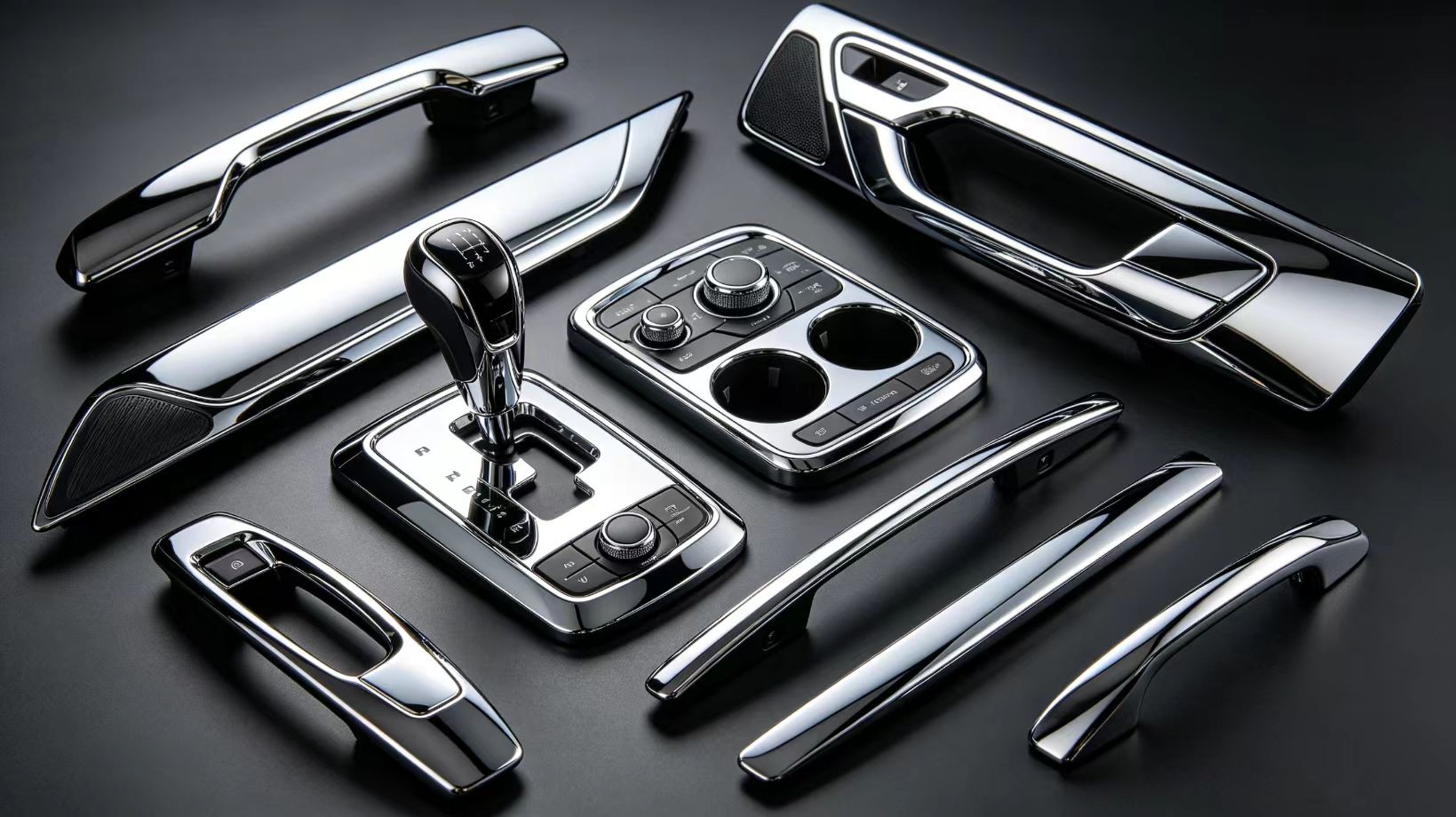
Electronics and Electrical Components – These parts often require thin walls, tight tolerances, and excellent surface finish. HI5330’s high flow (30 MI) reduces injection pressure and residual stress, minimising warpage in connectors, housings, and switchgear. In our experience, using HI5330 for a laptop bezel reduced cycle time by 8% compared to a lower-flow grade, without compromising mechanical integrity. For parts that need metal plating (e.g., decorative trims or antenna housings), an electroplating-grade PC/ABS is recommended; its formulation ensures uniform plating adhesion and thermal cycle resistance, which is critical for automotive interior/exterior plated parts.
Tool Housings and Industrial Components – Here, dimensional accuracy and long-term creep resistance are paramount. HI5345, with a shrinkage range of only 0.4-0.6% and high flexural modulus, provides consistent part dimensions over multiple batches. We have supplied this grade to power tool manufacturers who reported a 30% reduction in reject rates due to improved flatness on large covers. Its balanced flow (25 MI) also allows filling of thick sections without sink marks, provided that gate design and packing parameters are optimised.
Automotive Parts (Interior and Under-hood) – The combination of heat and impact resistance is often required for dashboard components, pillar trims, and engine-adjacent covers. HI5365’s HDT of 102°C ensures it withstands temperatures encountered during summer cabin soak (typically 80-90°C) and under-hood exposure. Its high notched impact (65 kJ/m²) meets safety requirements such as head-impact compliance. However, for under-hood applications with continuous exposure to hot oil or aggressive chemicals, additional testing for chemical resistance is advised, as PC/ABS may be susceptible to stress cracking in certain environments.
It is important to note that all three grades are HB rated. If your application demands V-0 or V-2 (e.g., battery housings, charging stations), you should select a flame-retardant PC/ABS compound, which often uses different additives and may have altered mechanical properties.
5. Processing Considerations for Each Grade
Even with the right grade, processing conditions can make or break part quality. Based on our technical support records, the most common mistakes are insufficient drying and improper temperature settings.
Drying – All three grades require drying at 80-100°C for 2-4 hours. PC is hygroscopic and undergoes hydrolysis if moisture exceeds 0.02%, leading to silver streaks and drastic loss of impact strength. We recommend using a desiccant dryer with dew point below -30°C.
Melt Temperatures – For HI5330 and HI5345, the recommended barrel temperatures are: rear 230-250°C, middle 240-270°C, front 250-270°C, with nozzle at 240-250°C. HI5365, due to its higher PC content and HDT, can tolerate slightly higher settings: front 250-275°C, nozzle 240-265°C. Exceeding these ranges may cause thermal degradation, while lower temperatures can result in incomplete melting and high viscosity.
Mold Temperature – Maintain mold at 70-80°C for HI5330 and HI5345, and 70-85°C for HI5365. Higher mold temperatures improve surface gloss and reduce internal stresses, but they prolong cooling time. In high-volume production, we often suggest starting at the midpoint and adjusting based on part aesthetics and dimensional reports. Additionally, injection speed should be moderate – too fast can cause melt fracture, too slow may lead to premature solidification.
From a practical standpoint, we have seen that using HI5365 on a poorly heated mold led to excessive warpage; after raising mold temperature from 60°C to 80°C, the issue was resolved. Such fine-tuning is essential and should be validated through systematic design of experiments.
6. Conclusion: A Practical Selection Framework
Choosing the right PC/ABS alloy boils down to prioritising application requirements:
For thin-walled electronics and high-flow parts → HI5330 (high MI, low density)
For structural components needing dimensional stability and rigidity → HI5345 (low shrinkage, high modulus)
For automotive or heavy-duty parts requiring heat and impact resistance → HI5365 (high HDT and impact)
For electroplated surfaces, always evaluate an electroplating-grade PC/ABS specially formulated for adhesion, but use the above grades as baseline references for mechanical and thermal properties. Remember that all three are HB; any fire-safety regulation will demand a flame-retardant variant.
We strongly recommend involving your material supplier early in the design phase. At Qingdao Prime Union Trade Co., Ltd., we have supported customers in transitioning from general-purpose grades to custom-modified solutions via our own compounding facility, which allows us to tailor impact modifiers, heat stabilisers, or flow enhancers as needed. By combining our distribution network (including 4 warehouses and bonded trade capabilities) with technical expertise, we help reduce time-to-market and avoid costly mould modifications after tooling is complete.
Finally, always verify property data with your own testing under actual processing conditions, as the values shown are typical and may vary with pigmentation, additives, and mould design.