 English
 Korean


The outdoor lighting and optical components market has been expanding steadily, and with it, the demand for polycarbonate grades that can survive prolonged UV exposure without yellowing or losing mechanical integrity. In our experience supplying engineering plastics to manufacturers across Asia and Europe, we have observed that procurement teams and product designers often evaluate UV-stabilized PC grades using different criteria—purchasing focuses on cost and supply continuity, while design emphasizes optical clarity and impact resistance. Bridging that gap requires a shared understanding of what actually matters in material selection. LEXAN™ 103R, a high-viscosity, UV-stabilized polycarbonate from SABIC, offers a practical reference point for this discussion. This guide outlines five critical factors that both procurement and design professionals should consider when sourcing UV-stabilized PC resin.
Factor 1: Outdoor Durability and UV Stabilization
The primary reason to specify a UV-stabilized PC over a general-purpose grade is long-term outdoor performance. Standard polycarbonate, without UV protection, begins to yellow and lose surface gloss after 12 to 24 months of outdoor exposure—a failure mode that leads to warranty claims and product recalls. LEXAN™ 103R addresses this with an integrated UV stabilizer package that meets the UL746C f1 outdoor rating. This certification indicates that the material has passed UV exposure and water immersion tests required for outdoor applications.
What does this mean in practice? For a lighting manufacturer producing streetlight lenses, switching from a non-stabilized PC to LEXAN™ 103R eliminated field complaints related to yellowing after 18 months of installation. The UL746C f1 rating gave their quality team a documented basis for product certification. For procurement, the key takeaway is this: verify that the grade you are sourcing carries a recognized outdoor rating—not every "UV-stabilized" claim is backed by third-party certification. SABIC's documentation confirms that LEXAN™ 103R carries both UL94 HB (0.75 mm and 3.0 mm) and UL746C f1 ratings.
Factor 2: Optical Performance and Clarity
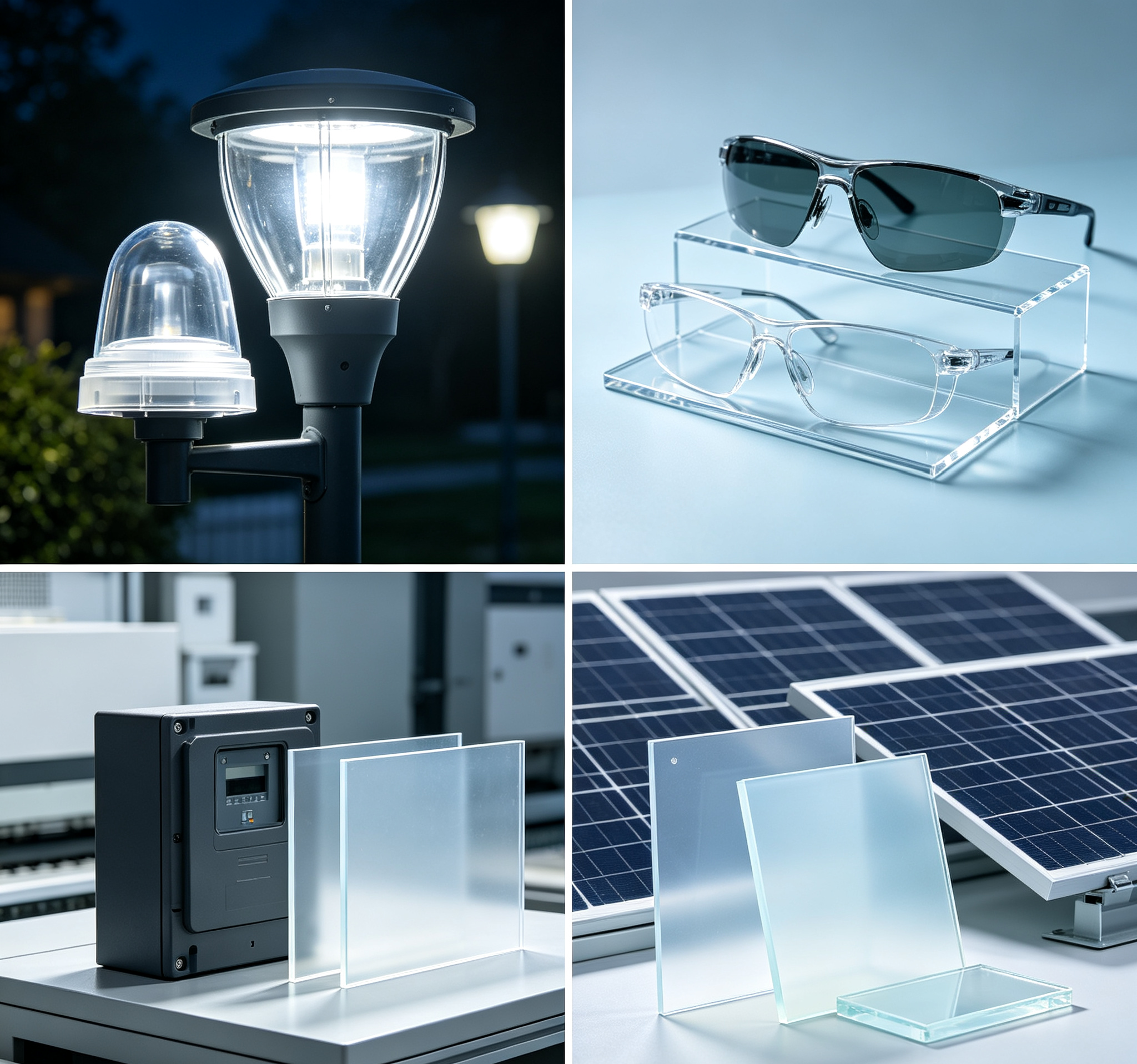
For applications involving light transmission—LED lenses, diffusers, safety eyewear, or display covers—optical clarity is non-negotiable. The industry benchmark for high-transparency PC is light transmission of 88-90% and haze below 1%. LEXAN™ 103R delivers light transmission of 88-90% at 2.54 mm thickness and haze of less than 0.8%, placing it on par with premium optical PC grades. The refractive index of 1.586 aligns with standard optical design parameters, making it a drop-in replacement for many existing lens and light-guide applications.
From a designer's perspective, the ability to maintain optical clarity while also carrying UV stabilizers is what distinguishes this grade. Many UV-stabilized PCs sacrifice transparency to achieve weatherability— LEXAN™ 103R does not. One optical component supplier we work with evaluated three UV-stabilized PC grades for a solar concentrator cover application. Only the grade that maintained transmission above 88% after accelerated UV testing passed their qualification. When sourcing, procurement teams should request optical property data from the TDS and, where possible, accelerated weathering test results.
Factor 3: Processing Characteristics and Moldability
Processing considerations often become the point where design intent meets production reality. LEXAN™ 103R has a melt flow rate (MFR) of 7.0 g/10 min (300°C/1.2 kg) and a melt volume rate (MVR) of 6.0 cm³/10 min, classifying it as a high-viscosity grade. This is not a high-flow material for thin-wall molding—it is specifically designed for thicker sections where lower-viscosity grades tend to produce sink marks or internal voids.
The grade also contains an internal mold release agent, which reduces ejection force during injection molding. For manufacturers running multi-cavity molds or parts with complex geometries, this translates into more consistent cycle times and fewer part defects. One molder producing LED lens arrays reported that cycle time dropped by approximately 5% after switching to a grade with internal release—small improvements that add up over high-volume production runs.
Processing parameters from the TDS include a drying temperature of 120°C for 2-4 hours, with maximum moisture content of 0.02%. Melt temperature should be set between 290-320°C and mold temperature between 80-120°C. Procurement teams should confirm that their contract manufacturer or in-house molding operation has the capability to handle these parameters consistently.
Factor 4: Mechanical and Thermal Performance
Beyond UV resistance and optics, the base mechanical properties of the resin determine whether the finished part survives its service environment. LEXAN™ 103R delivers tensile strength at yield of 62.1 MPa and at break of 65.5 MPa, with elongation at break of 110%. Flexural modulus is 2340 MPa and flexural strength at yield is 93.1 MPa. Perhaps most notably, notched Izod impact strength at 23°C is 910 J/m—substantially higher than many general-purpose PC grades.
Heat deflection temperature (HDT) at 1.8 MPa, 6.4 mm is 132°C. Vicat softening temperature (B50) reaches 144°C. For electrical applications, volume resistivity exceeds 1.1E+15 Ω.cm and dielectric strength is 17 kV/mm in oil at 3.2 mm. These properties make LEXAN™ 103R suitable for outdoor electrical enclosures, junction boxes, and components that must withstand both temperature cycling and electrical stress.
When comparing UV-stabilized grades, we recommend looking beyond the headline numbers. The combination of high impact resistance and thermal stability, maintained alongside UV stabilization and optical clarity, is what differentiates this grade from simpler, single-purpose formulations.
Factor 5: Supply Chain Reliability and Sourcing Strategy
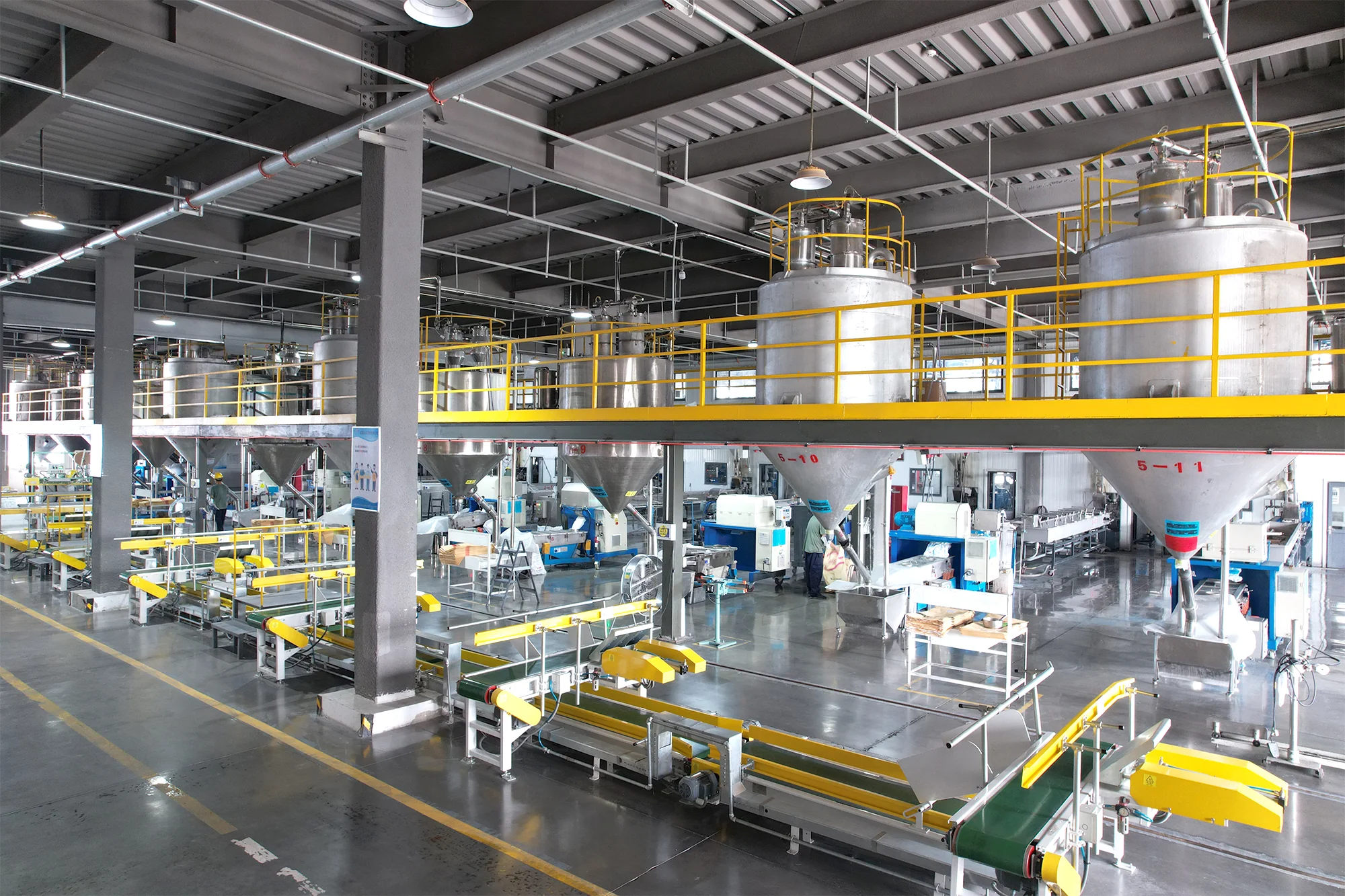
Even the best material specification is useless if the supply chain cannot deliver consistently. Over the past two decades in plastic raw material distribution, we have seen procurement strategies fail not because of poor material selection, but because of unreliable supply. For LEXAN™ 103R, availability across Asia Pacific is documented, and as an authorized SABIC distributor, we maintain in-stock inventory across four company-owned warehouses in China. This network supports general trade, processing trade, and bonded warehouse transactions.
For procurement managers, the key questions should include: Does the supplier hold inventory of the specific grade? Can they support the required trade terms? Do they have the documentation—COA, MSDS, UL Yellow Cards—ready for compliance review? SABIC's UL Yellow Card for this grade is E45329-103028646, and the material is listed as commercially active.
Our experience suggests that design teams and procurement should align early on a shortlist of qualified grades, then evaluate suppliers based on inventory depth, documentation readiness, and technical support capability. For companies requiring color matching or modification, our sister company, Qingdao Primetech Plastics Co., Ltd., provides in-house compounding services for PC and other engineering plastics, with typical sample lead times of 3 days and production lead times of 7 days for standard colors and basic modifications.
A Practical Framework for Grade Evaluation
To consolidate the above factors, here is a simple framework that both procurement and design teams can use when evaluating UV-stabilized PC grades:
| Evaluation Factor | What to Verify | LEXAN™ 103R Reference |
|---|---|---|
| Outdoor durability | UL746C f1 rating or equivalent | UL746C f1 rated |
| Optical clarity | Light transmission >88%, haze <1% | 88-90% transmission, <0.8% haze |
| Processing fit | MFR/MVR matches part geometry | 7.0 MFR / 6.0 MVR, high viscosity |
| Impact resistance | Izod impact for application needs | 910 J/m notched Izod |
| Supply reliability | Inventory, trade support, documentation | In-stock, four warehouses, bonded trade |
This table is not intended as a complete specification—each application requires its own validation through testing and analysis. But it provides a starting point for cross-functional discussion.
Conclusion
Sourcing UV-stabilized polycarbonate requires balancing outdoor durability, optical performance, processing characteristics, mechanical properties, and supply chain reliability. LEXAN™ 103R demonstrates how these factors can be addressed in a single grade—combining UV stabilization, high clarity, and robust mechanical performance. For procurement managers and product designers alike, the most effective approach is to define requirements early, verify material data against application needs, and partner with suppliers who can provide both product and technical support.
Source: SABIC – LEXAN™ Resin 103R Technical Datasheet (Public TDS)