
 English
 Korean


Understanding Functional Masterbatch Types and Technical Specifications
The global plastic masterbatch market exceeded USD 42 billion in 2025, with functional grades — antimicrobial, anti-static, UV-stabilized, and flame-retardant variants — growing at 12.3% year-over-year, now representing 28.7% of total consumption. Functional masterbatch is evolving beyond conventional coloration toward multi-functional formulations that address specific end-use performance requirements. China accounts for approximately 35% of global masterbatch production and consumption, with annual growth holding between 5% and 7%. For sourcing professionals and engineers, selecting the right functional masterbatch directly impacts product performance, processing stability, and total cost of ownership — yet the range of available options and technical specifications can make the selection process challenging to navigate.
Based on our interactions with sourcing teams across the fiber, packaging, and hygiene industries, we frequently encounter a common misunderstanding: functional masterbatch is often equated with color masterbatch. The distinction matters. Functional masterbatches are engineered to impart specific properties — flame retardancy, antimicrobial activity, UV protection — while the base resin (PET, PP, PE, or PA) determines carrier compatibility and processing requirements.

Hygiene-Grade White Masterbatch
represents one of the fastest-growing categories, driven by rising quality standards in personal care products. Formulated with nano-scale titanium dioxide (TiO₂) at loadings up to 60%, these masterbatches feature tight particle size distribution, high whiteness, low differential pressure (DF), and excellent dispersibility — resulting in extended spinning cycles and stable component pressure. Compatible with PE, PET, PP, and PA, they are used in nonwoven fabrics for feminine hygiene products, baby and adult diapers, face masks, and cleansing wipes. Products in this category must meet medical-grade and food-contact certifications — a qualification we consider non-negotiable for hygienic applications.

Optical Brightening Masterbatches
absorb UV radiation and re-emit visible light in the 420–440 nm range, creating a bluish-white appearance that enhances fabric brightness. These find broad use in PET, PP, and PE spun fibers for shirts, medical garments, sewing thread, and footwear materials.

Flame-Retardant Masterbatches
based on halogen-free systems achieve V0 ratings at 10–15% loadings while preserving melt stability and spinnability. Formulations can be tailored for PET, PP, or PA carriers, serving carpet, nonwoven, industrial protective clothing, automotive components, and wire/cable applications.

Antimicrobial Masterbatches
incorporating submicron inorganic silver or zinc compounds provide durable, wash-resistant antibacterial performance. They are widely specified for socks, underwear, and bed linens — products that contact skin directly.

UV-Stabilized Masterbatches
absorb radiation across the 200–380 nm range with ≥99% UV blocking efficiency while maintaining visible light transmittance above 90%. These are applied in geotextiles, marine ropes, outdoor furniture, and appliance components exposed to prolonged sunlight.

Anti-Static and Conductive Masterbatches
dissipate static charge and prevent electrostatic accumulation. Anti-static grades serve electronic packaging and handling trays, while conductive versions — based on carbon black or metallic filler networks — are specified for ESD-safe piping, sheet materials, and coatings.

Matting Masterbatches
reduce surface gloss for textiles and films where a muted, non-reflective finish is desired, typically at 0.4–0.6% addition rates.

Slip and Anti-Blocking Masterbatches
with 1.5 µm silica content reduce friction and prevent film surface adhesion in PET, PP, and PE film and sheet extrusion.

Yellowing-Reduction Masterbatches
correct yellow color shift in recycled resin streams, improving finished product appearance across PET, PP, and PE short-fiber and sheet applications.
Emerging categories — including graphene, aerogel, bamboo-charcoal (PP/PE), and fullerene masterbatches — are also gaining traction, offering far-infrared emission, antibacterial/odor-control, and thermal insulation functions that add differentiation value in textiles and specialty products.
Application Fields and Processing Considerations
Functional masterbatches expand the performance boundaries of base polymers across multiple end-use sectors.
Hygiene and Personal Care is the fastest-growing application segment. Market data from 2025 indicates that nonwoven hygiene product demand continues to rise, with masterbatch selection now a critical variable in product safety and supply chain compliance. White masterbatches for sanitary napkins, diaper top-sheets, and mask nonwovens must demonstrate low extractables, zero migration, and consistent color stability under high-speed production conditions. Antimicrobial masterbatches add bacterial inhibition — a feature increasingly requested in premium hygiene lines.
Fibers and Textiles — PET, PP, and PA staple fibers, continuous filaments, and nonwovens — remain the largest application category. Black PET masterbatches, typically formulated with 31% ± 1.0 pigment carbon black, deliver deep jetness, extended spinning cycles, and stable pressure profiles, making them the preferred choice for apparel, curtain, and bedding fabrics. Color masterbatches for PET fibers are selected for filterability and chromatic intensity, supporting carpet, upholstery, and garment applications where shade consistency is paramount.
Packaging Films and Sheets — PET preforms, BOPET, BOPP, and shrink films — increasingly rely on functional masterbatches for UV barrier, optical enhancement, and processing aids. BOPET white masterbatches for optical applications (display backlighting, solar reflectors, high-end electronics packaging) impose exceptionally tight DF and dispersion specifications, as film optical quality — haze, clarity, and thickness uniformity — depends directly on masterbatch quality. PETG shrink film masterbatches require high whiteness, blue-tone correction, and final shrinkage above 70%.
Injection Molding and Extrusion applications — appliance housings, automotive interior components, electronic parts — call for flame-retardant, anti-static, UV-resistant, and weatherable formulations. Weather-resistant masterbatches combining light and heat stabilizers extend service life in geotextiles, outdoor furnishings, and automotive interior applications exposed to harsh environmental conditions. PP stiffness-enhancing masterbatches improve transparency, rigidity, and shrinkage control in BOPP shrink films, CPP films, and PP sheet.
Processing parameters differ significantly by resin type. PET processing typically runs at 260–290°C and requires masterbatch carriers with thermal decomposition temperatures above 300°C to prevent degradation and volatile outgassing during spinning. PP and PE process at lower temperatures but have their own compatibility requirements. Drying protocols also vary — flame-retardant masterbatches generally require 85–105°C for 4 hours, while antimicrobial grades may require vacuum drying at 105–130°C for 4–6 hours before use. These details are not academic: overlooking carrier compatibility or drying parameters is a frequent source of processing difficulties in production-scale runs.
Supply Chain Integration: From Raw Materials to Production
The consistent quality and reliable delivery of functional masterbatches depend on a vertically integrated supply chain spanning resin sourcing, compounding, and logistics.
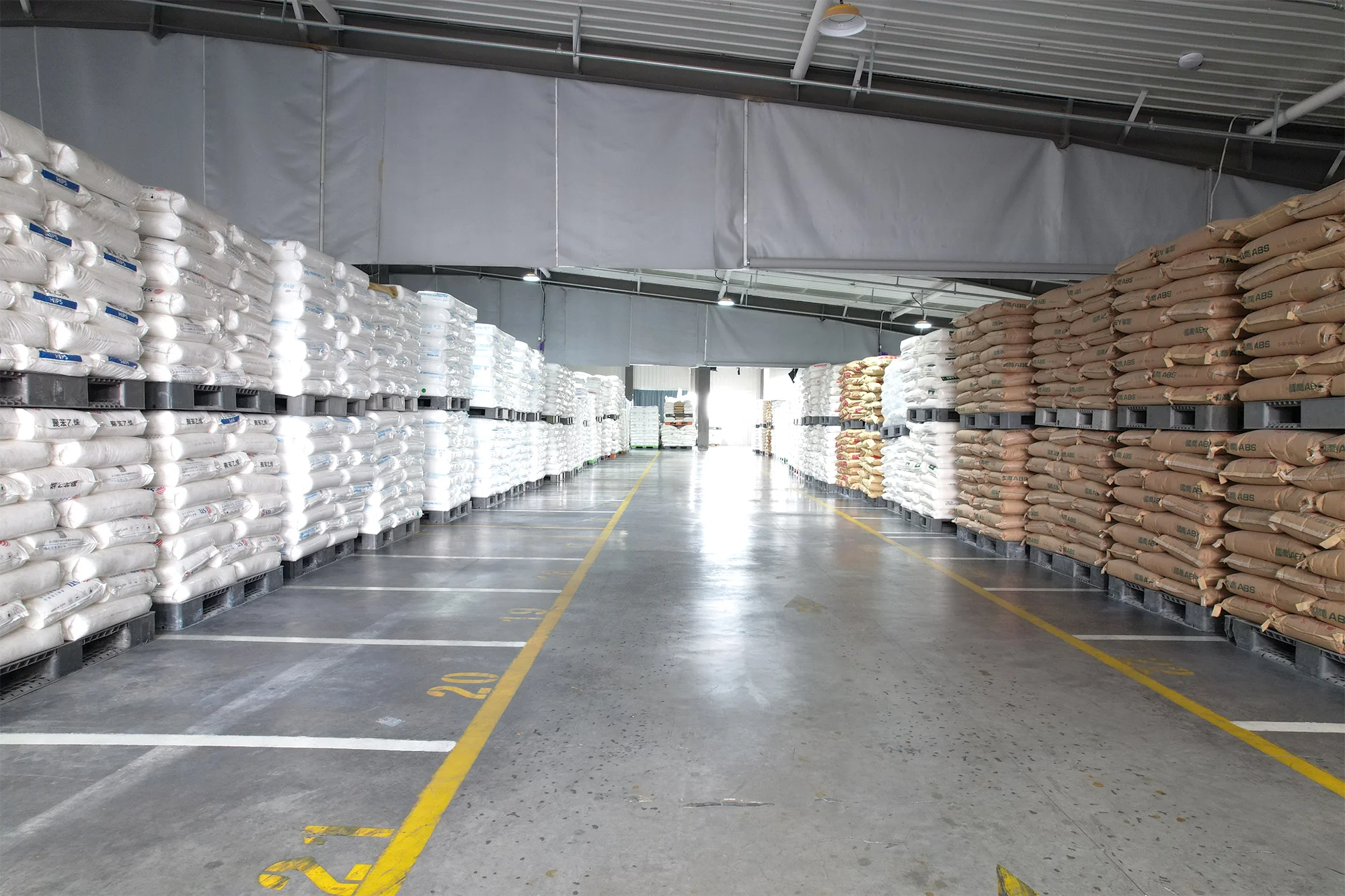
At the raw material level, Qingdao Prime Union Trade Co., Ltd. has operated in the plastic raw material distribution sector since 2002. As an authorized Tier-1 distributor for Chimei, SABIC, Hanwha Total, and Hyosung — with direct supply relationships extending to Mitsubishi, Rohm, and LG Chem — the company maintains a stable, traceable supply of ABS, PC, PP, PMMA, EVA, and other engineering plastics. Tier-1 distributor status provides a significant advantage: it ensures carrier resin quality consistency and lot-to-lot reproducibility, eliminating a common source of masterbatch performance drift.
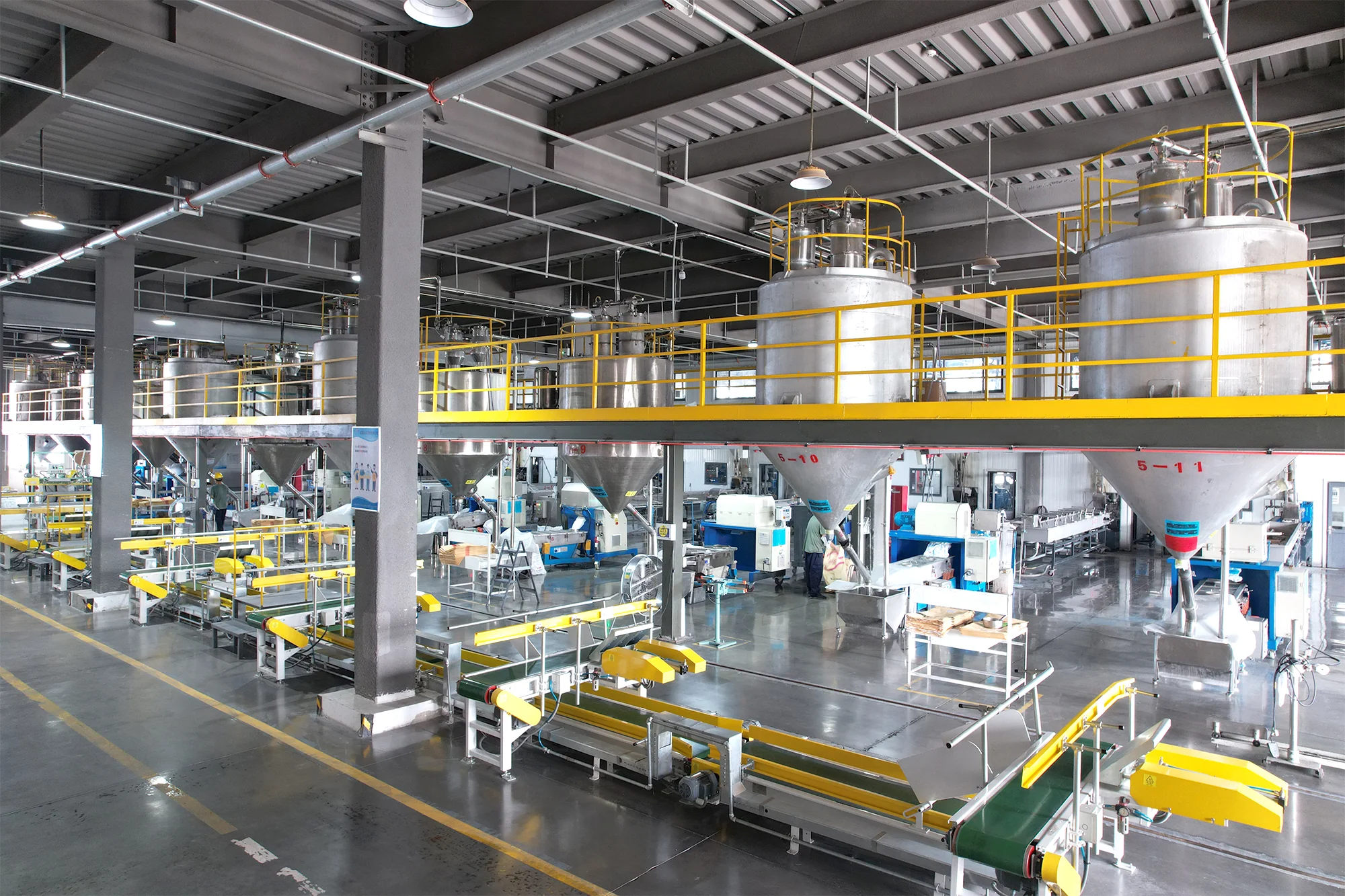
At the production level, Qingdao Hengbeite New Materials Co., Ltd. operates 10 COPERION twin-screw compounding lines with an annual capacity of 30,000 metric tons. As the pilot-scale and industrialization base for Qingdao University of Science and Technology's High-Performance Polymer Research Institute, Hengbeite maintains a full range of analytical equipment including EDX8300 energy-dispersive X-ray fluorescence spectrometry for hazardous substance screening, CM-3600D spectrophotometry for color measurement, differential pressure testing for dispersion evaluation, OIT analysis, and UV aging test chambers. The company's products have passed national inspection certifications for medical-grade, food-contact, and toy-grade applications — a requirement we emphasize for hygiene, medical, and food packaging applications. For hygiene-grade masterbatches, the quality control regimen includes additional extractables and migration testing, ensuring compliance with increasingly strict global regulatory frameworks.
At the modification level, Qingdao Primetech Plastics Co., Ltd. — established in 2007 — operates 22 COPERION twin-screw compounding lines with modification capabilities spanning toughening, filling, alloying (including PC/ABS), flame retardancy, and custom color matching. Standard color and basic modification samples are available within 3 days, with production quantities ready in 7 days — a turnaround that reflects the integration of compounding expertise with masterbatch production.
Logistically, Qingdao Prime Union Trade Co., Ltd. maintains a 5,000 m² warehousing facility in the Qingdao Free Trade Zone, supplemented by four additional warehouses across China. This infrastructure supports general trade, processing trade, and bonded transfer operations with substantial stock levels of key products.
Regarding sampling policy: all samples are provided on a paid basis, with sample costs credited against subsequent purchase orders — an approach that ensures effective allocation of technical resources to qualified production projects.
Functional masterbatches are moving toward multi-functional, application-tailored formulations while the range of compatible base resins continues to expand. For sourcing professionals and engineers, the selection decision hinges on three elements: matching masterbatch functionality to end-use requirements, confirming carrier compatibility with processing conditions, and securing supply from partners with integrated quality systems and consistent raw material sources. As hygiene, medical, and food-contact applications impose ever-higher safety standards and regulatory demands, suppliers with certified quality systems, established testing protocols, and a vertically integrated supply chain offer a competitive advantage that extends beyond product specifications to long-term supply assurance.