
 English
 Korean



The organic light diffusion agent market is shifting from a commodity additive to a functional component that affects optical yield and film processability. According to a 2026 YH Research report, global organic light diffusion agent revenue reached approximately RMB 10.56 billion in 2025 and is projected to approach RMB 14.41 billion by 2032, a 4.3% compound annual growth rate, with growth concentrated in LED lighting diffusers, LCD backlight units, and automotive soft-glow parts. The structural change inside this category is more telling than the headline figure: low-end polyethylene grades are losing share, while acrylic, silicone, and core-shell microsphere structures are gaining ground. Downstream requirements for adjustable transmittance and haze with low batch-to-batch variation have become far more specific. Acrylic bead light diffusion performance, as a representative spherical microsphere within the acrylic family, now extends beyond light diffusion into film anti-blocking and surface matte treatment, forming a set of application logic unified by one common variable: particle size distribution.
Light Diffusion: Distribution Tail Matters More Than Median Size
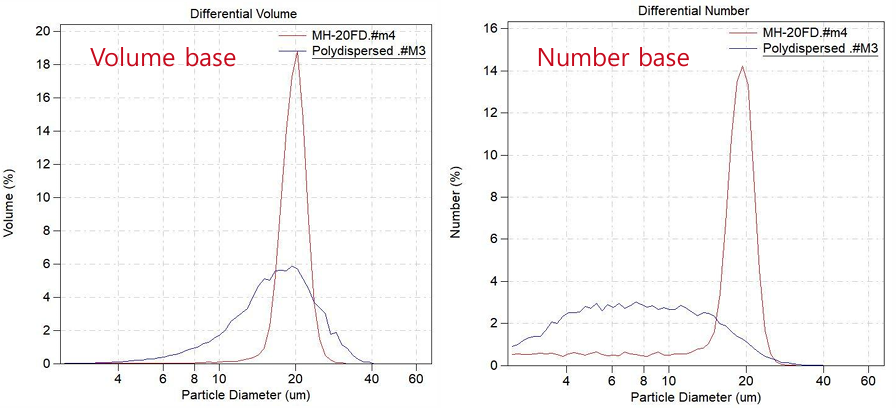
In PC, PMMA, and PS diffuser plates or films, microspheres create a refractive index difference (the bead and matrix resin have different refractive indices, so light refracts and scatters at the interface) and break up point light sources. One frequently overlooked fact is that final optical performance depends not only on where the median diameter (D50, the particle size at which cumulative distribution reaches 50%) sits in microns, but on how long the tail of the distribution curve is. That means the large-particle tail represented by D90 (the particle size at which cumulative distribution reaches 90%) and the distribution width reflected by C.V.% (coefficient of variation, a measure of distribution narrowness where lower values indicate a tighter distribution).
The basic rule of light diffusion is straightforward: as particle size increases, transmittance (the ratio of transmitted luminous flux to incident luminous flux) tends to rise while haze (the ratio of scattered luminous flux to total transmitted luminous flux, indicating the fogging degree of a transparent material) falls. As particle size decreases, haze rises but transmittance is constrained. If a bead has too broad a size distribution, large particles contribute higher transmittance while small particles push haze up, making it difficult for formulators to find a stable balance point.
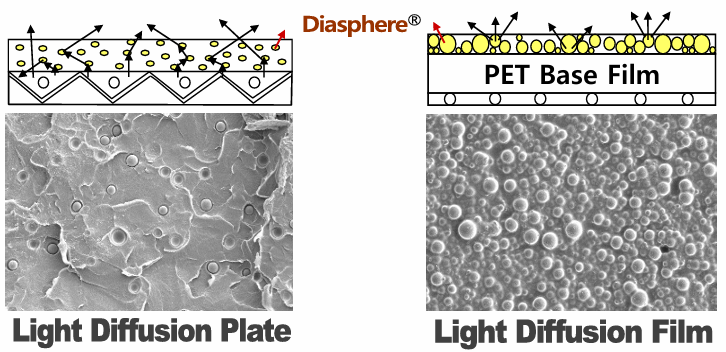
Table 1 shows optical data for a narrow-distribution PMMA bead in a PC matrix at different loading levels, as a reference for observing the relationship between loading and haze/transmittance:
| Loading (PC matrix) | Haze (%) | Transmittance (%) |
|---|---|---|
| 0.5% | 64.26 | 87.95 |
| 1.0% | 85.75 | 85.59 |
The same product delivers relatively predictable optical shifts at different loadings, provided the particle size distribution is sufficiently tight. Otherwise, this adjustability is consumed by batch-to-batch variation. From our experience supplying the diffuser plate sector, one case involved a customer replacing a broad-distribution bead and observing haze drift during the mid-to-late stages of continuous production. Root cause analysis traced the issue to amplified particle size distribution differences in the masterbatch (a pelletized concentrate of high-loading additive pre-dispersed in a carrier resin), not to screw design or temperature settings. For thin-wall, high-uniformity applications such as automotive lamp covers or lighting diffuser plates, looking at C.V.% first is more practical than fixating on a nominal micron class. Acrylic bead light diffusion agents also show relatively stable dispersion in solvent and waterborne systems, which is a plus for coating-type diffusion films.
Anti-Blocking: Sphericity Determines Friction Controllability
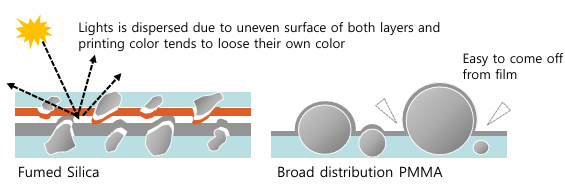
The opening performance of BOPP and CPP packaging films is fundamentally a geometric problem of surface micro-protrusions. Common industry reference ranges for automatic packaging BOPP films are a static coefficient of friction (the ratio of friction force to normal force when two surfaces begin to slide relative to each other) of 0.20–0.40 and a dynamic coefficient of friction (the ratio during maintained sliding) of 0.15–0.35, though specific values vary by product structure and customer standard. Irregular silica or crushed powder suffers from uncontrollable protrusion shape: localized sharp edges can scratch the film surface, and overly broad size distribution introduces oversized protrusions that form visible grain defects during printing or lamination.
The value of anti-blocking acrylic beads lies in the calculability of contact area that sphericity provides. Round microspheres form protrusions of relatively consistent height on the film surface, making the coefficient of friction easier to control linearly through formulation and loading, rather than being randomly depressed or elevated by individual large particles. Table 2 compares friction coefficients at the same 5 μm nominal size:
| Additive type (5 μm nominal) | Static COF (reference) | Dynamic COF (reference) | Primary difference source |
|---|---|---|---|
| Narrow-distribution spherical acrylic beads | ~0.39 | ~0.30 | Spherical protrusions, narrow distribution |
| Irregular silica | ~0.50 | ~0.35 | Irregular shape, localized sharp edges |
From customer feedback, the more intuitive change after replacing broad-distribution powder is often not a dramatic drop in absolute friction coefficient, but a narrowing of the standard deviation between batches, with fewer occasional sticking complaints at winding and slitting. It is worth noting that film anti-blocking does not pursue the slickest possible surface. Too low a friction coefficient can cause loose winding or pallet slippage. Selection should specify the target COF range along with film thickness and differences between corona-treated and non-corona surfaces, rather than simply requesting good opening.
Matte Texture: Particle Size Match and Distribution Width
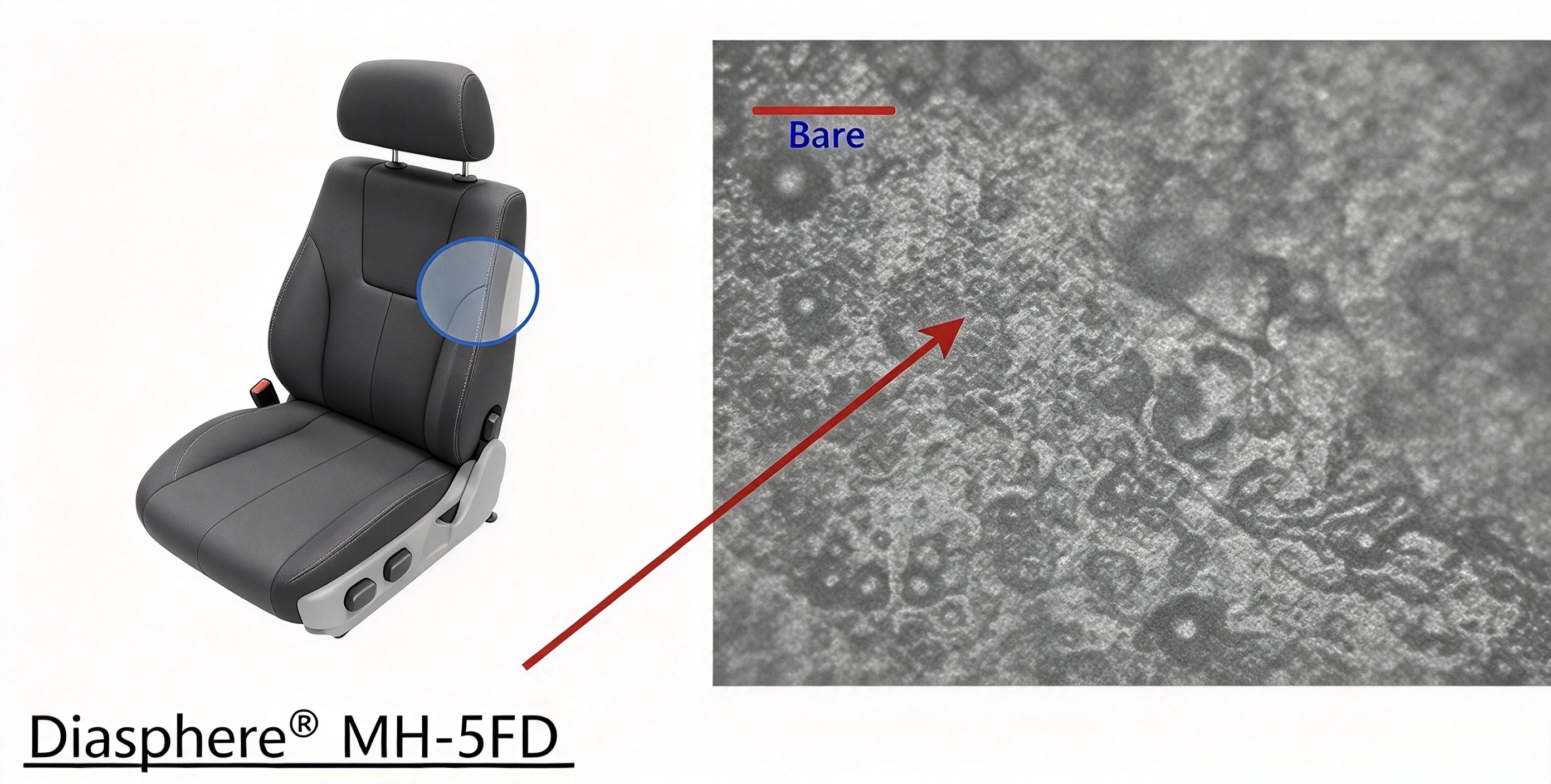
Beyond optics and opening performance, spherical polymer microspheres serve another underappreciated function in coatings, inks, leather finishes, and plastic surface treatment: creating uniform matte feel and gloss reduction. For home appliance housings, automotive interiors, consumer plastic parts, and leather surfaces, adding matte microspheres forms micro-texture on the surface, softening gloss, refining hand feel, and providing some scratch resistance and anti-slip effect. Particle size selection spans a wide range, from a few microns to several tens of microns depending on the target texture. Texture coarseness depends on the match between bead size and coating thickness or plastic skin thickness: too large produces a gritty feel, too small provides insufficient texture.
Distribution width is more critical. Narrow-distribution beads form protrusions of relatively consistent height, delivering uniform matte feel without localized hot spots or coarse bumps. Broad-distribution beads tend to produce both overly coarse and overly fine regions on the same surface, reducing visual and tactile consistency. For appliance or automotive interior parts requiring uniform matte and refined hand feel, the roundness and distribution tightness of spherical acrylic beads often determine final surface quality more than simply pursuing a finer particle size.
Processing Window and Dispersion: Read TGA Data in the Right Context
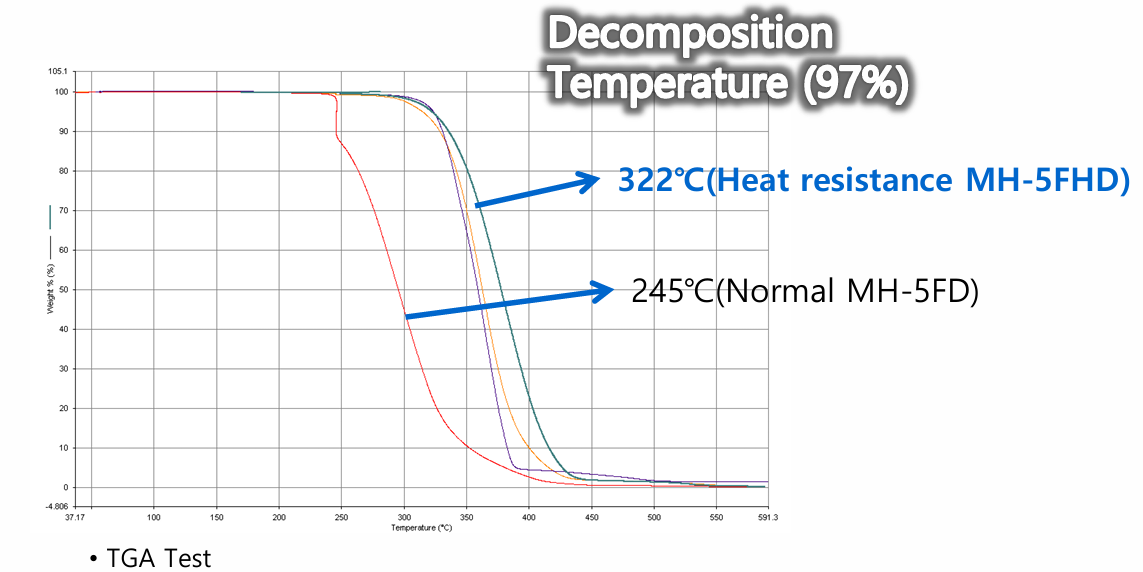
Processing temperatures for light diffusion and anti-blocking beads in PC and PMMA typically exceed 220°C, with some PC diffuser plate extrusion die sections reaching 260–280°C. A common procurement deviation is treating the 1% weight loss temperature on a supplier’s TGA (thermogravimetric analysis, an analytical method measuring weight loss behavior as a material is heated) curve as the direct processing upper limit. In reality, thermogravimetric data reflects initial decomposition behavior under inert atmosphere, while the combined effects of shear heat, residence time, and trace oxygen in a twin-screw extruder are more demanding than TGA conditions. Monitoring isothermal weight loss at 300°C over a defined period is closer to the real processing window than a single decomposition onset point.
Another high-frequency issue from actual cases is dispersion. When light diffusion agent content in masterbatch is too high, density differences between the bead and the PC matrix can create a specific gravity gradient under vibration in a loss-in-weight feeder (a device that meters feed by weight loss). This manifests as normal parts early in the run, elevated haze and reduced transmittance in the middle, and insufficient haze later. From a process standpoint, keeping masterbatch light diffusion agent content within a reasonable upper limit and using a screw configuration with a dispersive mixing section is more reliable than simply increasing loading to chase haze. Surface snowflake defects on diffuser plates caused by insufficiently dried PC compound are also easily misdiagnosed as poor bead dispersion; verification should return to drying at 120°C for 4–5 hours as the first step. Qingdao Prime Union Trade Co., Ltd. has over twenty years of trading experience in PC, PMMA, and ABS substrates. Our sister company, Qingdao Primetech Plastics Co., Ltd., has observed the same conclusion in PC/ABS alloy, coloring, and diffuser plate modification work: the impact of bead batch consistency on formulation scale-up often becomes more apparent at the modification stage than in laboratory trials.
Substrate and Additive Co-Selection in Practice
From light diffusion to anti-blocking to surface matte treatment, the selection logic for acrylic beads is shifting from whether we have this additive to whether this bead’s distribution and temperature window can be accommodated by the process window. For PC/PMMA diffuser plates or BOPP/CPP film applications, the technical evaluation should tie the substrate grade, target thickness, haze/transmittance band, and COF requirements to the bead’s distribution curve and isothermal weight-loss data, rather than comparing standalone datasheet values.
Qingdao Prime Union Trade Co., Ltd.
Qingdao Prime Union Trade Co., Ltd., as an authorized distributor for Chimei, SABIC, Hanwha Total, and Hyosung, maintains spot inventory in ABS, PC, PP, PMMA, and EVA, with four major warehouses across China supporting general trade, processing trade manuals, and bonded transfer operations. When projects involve coordinated substrate and additive selection, our sister company Qingdao Primetech Plastics Co., Ltd. handles PC/ABS alloying, toughening, filling, flame retardancy, coloring, and medical masterbatch requirements, forming an integrated substrate-to-modification capability that often reduces hidden process debugging costs more effectively than piecemeal price comparison. Samples are provided on a paid basis, with the cost deductible from subsequent volume orders.
Qingdao Primetech Plastics Co., Ltd.
Acrylic bead selection for light diffusion and anti-blocking comes down to three verifiable inputs: a volume-basis C.V.% with a quantified D90, an isothermal weight-loss window at the actual melt temperature, and—for film applications—a bead diameter sized appropriately to the skin-layer thickness. Procurement teams evaluating spherical acrylic beads for optical diffusers and anti-blocking films should require those data points before comparing grades, and should assess bead performance in the context of the actual substrate and compounding route. With substrate and additive supply aligned through Qingdao Prime Union Trade Co., Ltd. and modification support from Qingdao Primetech Plastics Co., Ltd., the technical basis for matching bead distribution and thermal window to a production process is more direct.

References
YH Research. (2026, July 1). 2026-2032 Global Organic Light Diffusion Agent Industry Research and Trend Analysis Report.
Beijing Testing Center. (2026, August 30). BOPP Film Coefficient of Friction Test.
Haiyang Powder. (2021, May 25). Common Issues with Light Diffusion Agents.
ASP Co., Ltd. (2026). Diasphere Technical Presentation: MH-10FD optical data in PC matrix and MH-Series distribution comparison.