
 English
 Korean


The global transparent ABS material market is experiencing sustained growth across multiple end-use sectors. According to industry data, the global Transparent ABS Plastics market was valued at approximately USD 2.62 billion in 2025 and is projected to reach USD 4.28 billion by 2032, representing a compound annual growth rate of 7.25%. The MABS (methyl methacrylate-acrylonitrile-butadiene-styrene) resin segment alone reached USD 476 million in 2025, with forecasts indicating growth to USD 623 million by 2032 at a CAGR of 4.0%. Asia currently dominates consumption, accounting for over 90% of the global market share.
This growth is driven by the material's unique combination of optical clarity, impact toughness, and processing versatility—attributes that conventional ABS cannot provide. From washing machine transparent windows and refrigerator drawers to automotive interior trims and medical device components, transparent ABS is displacing heavier materials and enabling new design possibilities.
For procurement managers and design engineers evaluating transparent ABS options, the selection process involves more than comparing price points. Material properties, processing behavior, supply chain reliability, and application-specific requirements all factor into the decision. This guide examines the critical parameters that distinguish transparent ABS grades and provides a framework for making informed sourcing decisions.
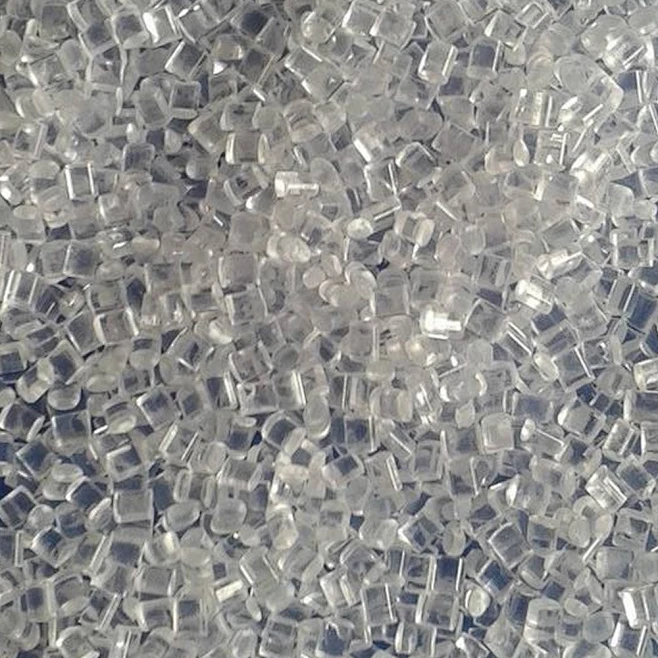
Understanding the Transparent ABS Advantage
The fundamental difference between conventional ABS and transparent ABS lies in the polymer architecture. Standard ABS is opaque because the rubber phase and the styrene-acrylonitrile (SAN) matrix have different refractive indices, causing light to scatter at the interface. Transparent ABS resin, also known as MABS, achieves clarity by incorporating methyl methacrylate into the polymer matrix and precisely controlling rubber particle size and distribution. The refractive index of the modified matrix is matched to that of the rubber phase, allowing light to pass through with minimal scattering.
The result is a material that delivers light transmittance of approximately 88% to 91%—comparable to PC (87-91%) and approaching PMMA (92-93%)—while retaining the impact resistance and processability that make ABS a workhorse engineering thermoplastic. Compared to PMMA, transparent ABS offers substantially higher impact strength (Izod values ranging from 50 to 235 J/m depending on grade, versus 16-24 J/m for PMMA). Compared to PC, it processes at lower temperatures with less demanding drying requirements and offers better chemical resistance in many applications.
From a procurement standpoint, this performance profile translates into a material that can replace more expensive engineering resins in applications where optical clarity and mechanical performance must coexist, without the processing challenges associated with PC or the brittleness of PMMA.
Comparative Analysis of Leading Transparent ABS Grades
LG Chem's transparent ABS portfolio offers a range of grades designed for specific application requirements. Understanding the performance distinctions among these grades is essential for accurate material selection.
LG Chem MABS TR530F is a high-impact, soft-grade material developed specifically for artificial nail applications. With an Izod impact strength of 235 J/m (3.2mm, 23°C) and a Rockwell hardness of R88, it provides the flexibility and toughness required for thin-wall parts that must withstand repeated bending without fracture. Its melt flow index of 10 g/10min (220°C/10kg) indicates moderate flowability suitable for small to medium-sized injection molded parts.
TR552F prioritizes optical performance above all else. With a luminous transmittance of 91% and haze of just 1%, it provides the highest optical clarity among LG Chem's MABS grades. This grade also demonstrates excellent whitening resistance, making it suitable for applications like edge banding and transparent carrier tapes where bending stress would cause other materials to turn white. The lower MFI of 5 g/10min reflects its higher molecular weight and correspondingly higher melt strength, which benefits extrusion processes.
TR557 and TR558A represent the general-purpose and high-performance tiers for appliance and electronics applications. TR557 delivers high impact strength (170 J/m, 3.2mm, 23°C) combined with a heat deflection temperature of 81°C (1.82MPa, unannealed). TR558A provides a balanced profile with good impact strength (125 J/m, 3.2mm, 23°C) and a higher MFI of 24 g/10min, which translates into superior flowability for thin-wall or complex geometry parts. Both grades are specified for washing machines, refrigerators, and electrical/electronic products.
The following table summarizes the key performance parameters:
| Property | Unit | TR530F | TR552F | TR557 | TR558A |
|---|---|---|---|---|---|
| MFI (220°C/10kg) | g/10min | 10 | 5 | 23 | 24 |
| Tensile Yield Strength | MPa | 33 | 40 | 48 | 50 |
| Flexural Modulus | MPa | 1500 | 1700 | 2250 | 2550 |
| Izod Impact (23°C, 3.2mm) | J/m | 235 | 50 | 170 | 125 |
| HDT (1.82MPa) | °C | 74 | 79 | 81 | 82 |
| Light Transmittance (3.2mm) | % | 89 | 91 | 90 | 90 |
| Haze | % | 3 | 1 | 1.5 | 1.4 |
Source: LG Chem product technical data sheets
Application Mapping: Matching Grades to End-Use Requirements
Different applications place different weights on the performance attributes of transparent ABS. Transparent ABS selection should begin with a clear definition of the end-use requirements.
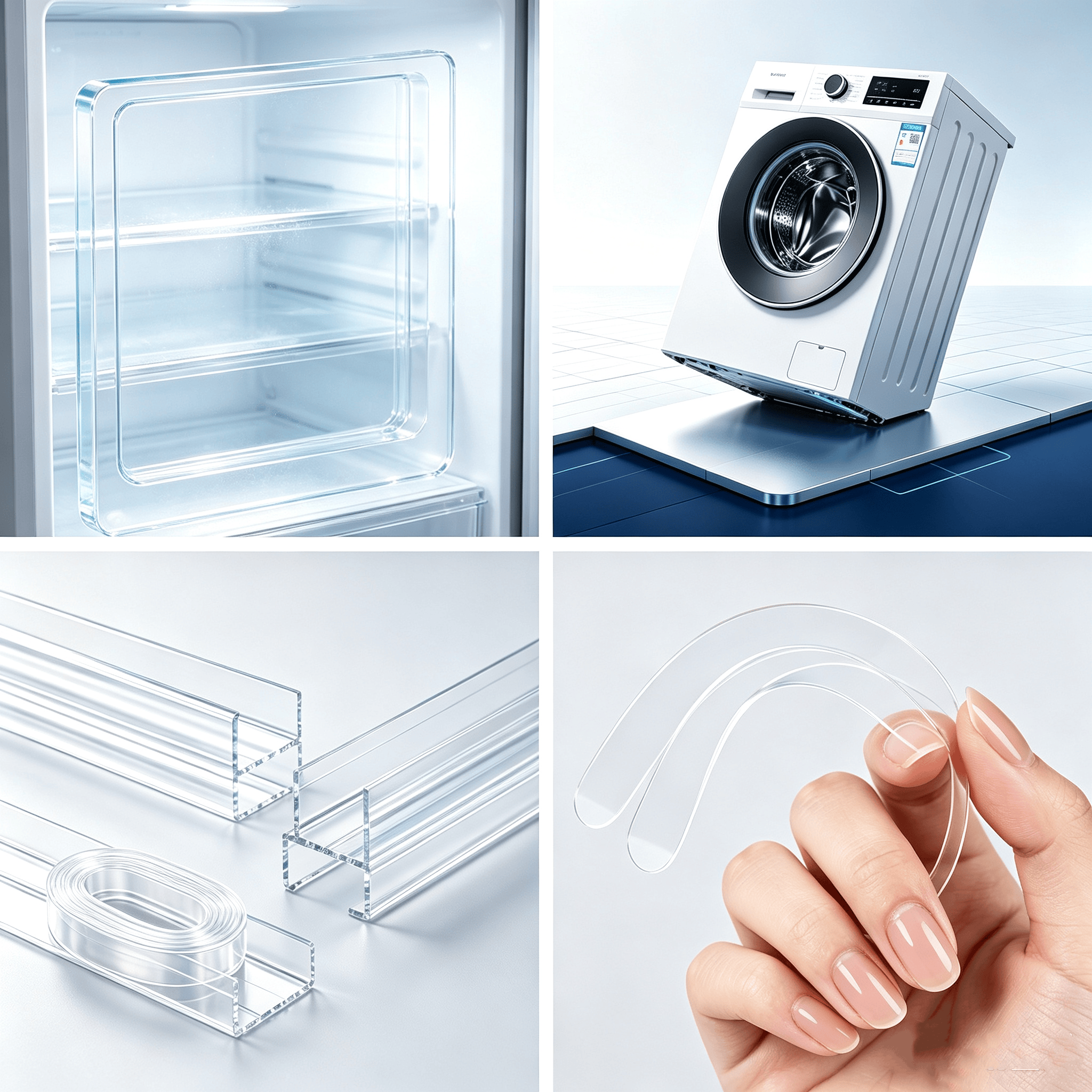
Appliance transparent components (washing machine lids, refrigerator drawers, vacuum cleaner canisters) demand a balance of impact resistance, heat deflection temperature, and optical clarity. TR557 and TR558A are the natural choices here. TR557 offers higher impact resistance for parts subject to mechanical stress, while TR558A provides better flow for complex geometries. Both grades maintain heat deflection temperatures above 80°C, sufficient for appliance operating environments.
Artificial nails and cosmetic packaging require materials that combine high transparency with flexibility and resistance to stress whitening. TR530F's low hardness (R88) and high impact strength make it suitable for thin, curved parts that must flex without breaking. The material's 89% transmittance and 3% haze provide adequate clarity for aesthetic applications where absolute optical perfection is less critical than mechanical performance.
Edge banding and transparent carrier tapes represent extrusion applications where optical quality and bending resistance are paramount. TR552F's 91% transmittance and 1% haze, combined with its whitening resistance, make it the grade of choice for these applications. The lower MFI supports the melt strength required for stable extrusion profiles.
Automotive interior applications increasingly employ transparent ABS for decorative trim, instrument panel components, and lighting elements that leverage LED backlighting effects. The material's ability to combine aesthetic transparency with mechanical durability makes it suitable for these visible, functional components. Grades with balanced impact and flow properties—similar to TR558A—are typically specified.
Medical devices and diagnostic equipment represent a growing application segment for transparent ABS, projected to grow at 7.2% CAGR through 2032. The material's transparency, impact resistance, and compatibility with sterilization processes make it suitable for housings, fluidic components, and diagnostic instruments. Regulatory compliance and biocompatibility requirements add another layer to the material selection process for medical applications.
Processing Considerations That Impact Material Choice
Transparent ABS shares processing characteristics with conventional ABS but requires tighter control to preserve optical quality. Transparent ABS injection molding demands attention to drying, temperature, and moisture management.
Drying is non-negotiable. Transparent ABS grades require drying at 70-80°C for 3-4 hours before processing. Insufficient drying leads to surface defects—silver streaks, splay marks, and bubbles—that degrade optical clarity. These defects are often misattributed to the material itself when they actually stem from processing conditions. From our experience supplying these materials, inadequate drying is the single most common cause of quality complaints in transparent ABS parts.
Injection temperature should be maintained within the 200-250°C range, with mold temperatures between 40-80°C. Higher mold temperatures improve surface quality and reduce internal stresses, but extend cycle times. The optimal temperature depends on part geometry and the specific grade being processed.
Screw speed should be kept between 30-60 rpm to minimize shear heating and material degradation. Excessive shear can cause discoloration or degradation of the transparent polymer. A general-purpose screw with a 2.5:1 compression ratio and minimum L/D ratio of 20:1 is recommended for melt homogeneity.
For procurement professionals, these processing requirements translate into practical considerations. Materials that process well on existing equipment reduce capital expenditure and training costs. Transparent ABS sourcing should therefore include an assessment of processing compatibility alongside material properties.
Procurement Strategy: Beyond the Data Sheet
Selecting the right transparent ABS grade involves more than comparing technical specifications. MABS resin procurement requires attention to supply chain reliability, quality consistency, and technical support.
Supply chain considerations have become increasingly important in the current environment. U.S. tariff adjustments implemented in 2025 have created ripple effects across transparent ABS supply chains, prompting manufacturers to reevaluate sourcing strategies. Working with established distributors who maintain inventory and can support multiple trade channels—general trade, processing trade, and bonded transfer—mitigates supply disruption risk.
Quality consistency is paramount for transparent materials. Unlike opaque ABS where minor variations in color or clarity may go unnoticed, transparent ABS reveals every inconsistency. Sourcing from Tier-1 distributors with direct relationships with manufacturers like LG Chem, Toray, and Chimei ensures access to authentic, traceable material.
Technical support capabilities distinguish material suppliers from simple traders. The ability to provide application-specific recommendations, troubleshoot processing issues, and support color matching or modification adds significant value. Companies with in-house modification and compounding capabilities—such as color compounding, toughening, or alloying—offer an additional layer of support that pure distributors cannot provide.
Cost considerations must account for total cost of ownership, not just price per kilogram. Factors including drying requirements, cycle time, scrap rate, and tool wear all affect the economic equation. A grade with higher material cost but better flow properties may reduce cycle time enough to offset the price premium. Transparent ABS cost analysis should include these operational factors.
Common Procurement Pitfalls and How to Avoid Them
Based on procurement patterns we have observed over two decades in the engineering plastics industry, several recurring mistakes merit attention.
Pitfall 1: Specifying by grade name without understanding equivalents. Different manufacturers use different nomenclature for similar materials. Understanding the underlying property requirements enables identification of alternative sources when primary grades face supply constraints.
Pitfall 2: Ignoring processing requirements during selection. A grade with excellent properties on the data sheet but requiring extended drying or specialized equipment may prove uneconomical in practice. Evaluating processing compatibility before specification prevents costly retrofits.
Pitfall 3: Overlooking color and additive requirements. Transparent ABS is often colored or compounded with additives for specific applications. Not all grades accept colorants equally well, and some applications require UV stabilizers, antistatic agents, or other modifications. Engaging with technical suppliers early in the development cycle ensures these requirements are addressed.
Pitfall 4: Accepting lower-grade substitutes without validation. The transparent ABS market includes materials with varying levels of optical clarity, impact resistance, and consistency. Lower-cost alternatives may meet minimum specifications on paper but fail to deliver consistent performance in production. Requesting sample material for validation before committing to large-volume purchases—and accepting that samples are not free—is a prudent procurement practice.
Why Partner with an Integrated Distributor and Compounder
The procurement process does not end at grade selection. Successful implementation depends on material availability, technical backup, and the ability to modify or color the resin to meet specific design requirements. This is where a distributor with an in-house compounding facility provides a distinct advantage.
Custom Compounding & Color
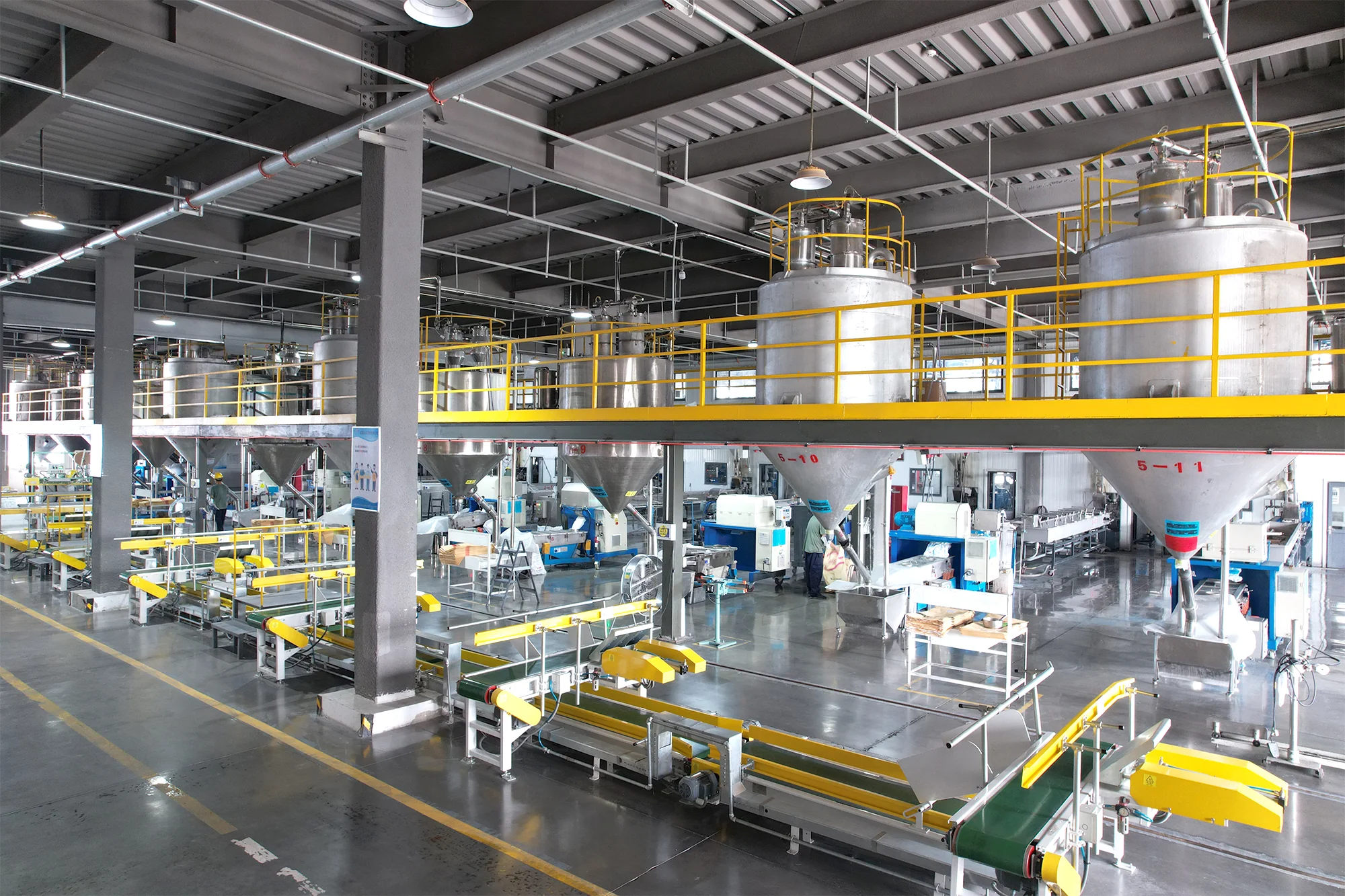
Our sister company, Qingdao Primetech Plastics Co., Ltd., operates a dedicated modification and color compounding factory. We offer toughening, filling, alloying (PC/ABS), flame retardancy, and medical-grade color masterbatches to adapt transparent ABS or other base resins to your exact specifications.
Multi‑warehouse Inventory
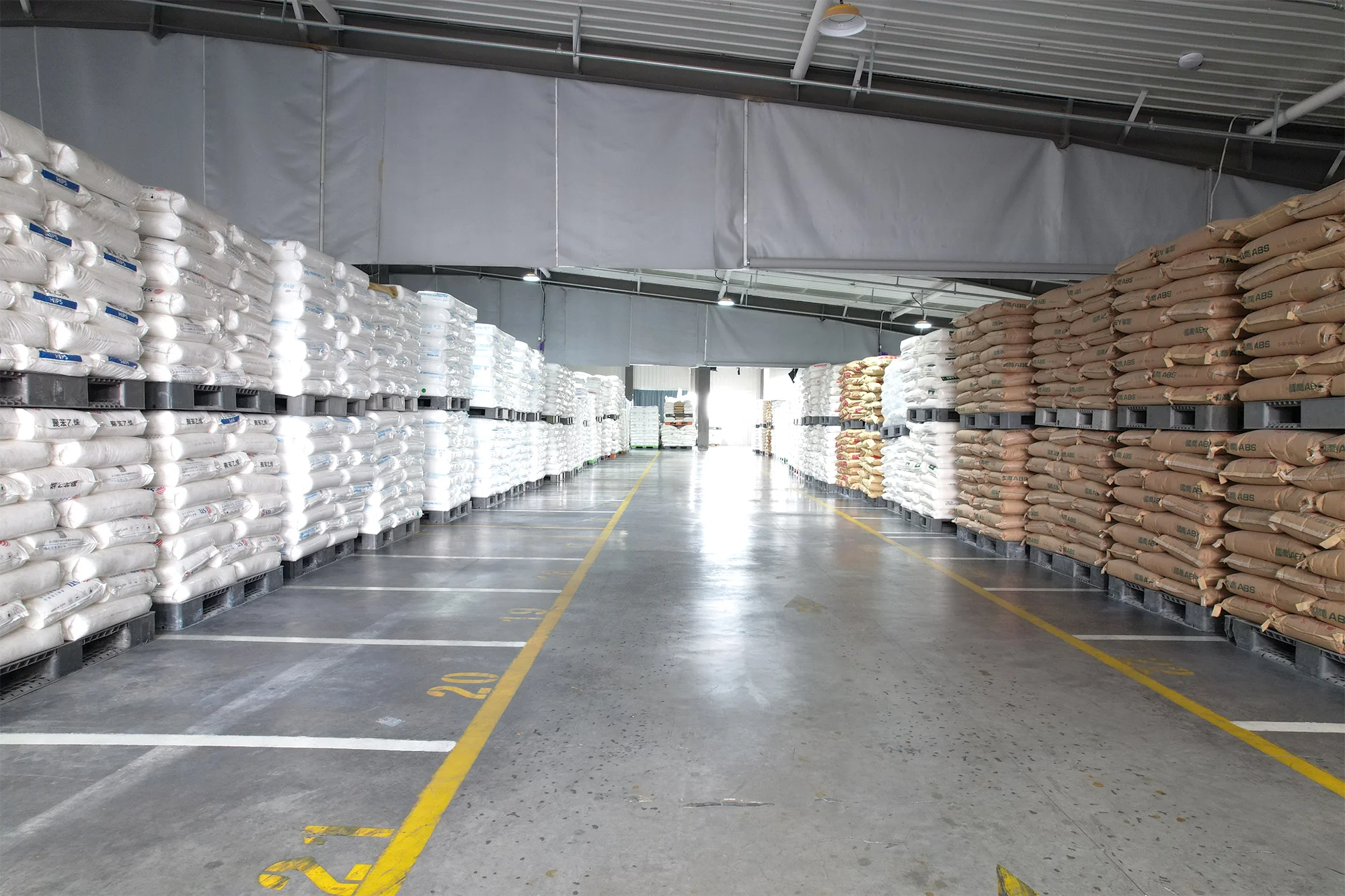
We maintain four major warehouses across China stocking high inventory levels of ABS, PC, PP, PMMA, EVA, and transparent ABS grades. Our logistics network supports general trade, processing trade, and bonded transfer, ensuring flexible supply chain solutions that minimize disruption risk.
Technical & Processing Support
Our in-house technical team assists with mold flow analysis, processing optimization, and alternative grade recommendations when supply constraints arise. We help you avoid costly trial-and-error and reduce time‑to‑market for your transparent parts.
Sample Validation & Deductible Cost
All samples are provided on a paid basis, but the sample cost is fully deductible from future purchase orders. This policy ensures serious inquiries receive priority attention while maintaining a low barrier to technical validation. We encourage you to test our materials in your own production environment before committing to large volumes.
From our experience, procurement managers who engage with a technical distributor early in the design phase avoid costly last-minute changes and secure better material pricing through predictable volume commitments. Our integrated approach—distribution plus compounding—gives you a single point of accountability for material supply and modification.
Next Steps for Your Transparent ABS Project
We recommend a structured approach: define your application’s mechanical, optical, and processing requirements; review the grade comparison table above to shortlist candidates; then contact our technical team to discuss your specific needs. We can provide material samples for in-house testing, offer comparative data with alternative resins (PC, PMMA, or PETG), and advise on color or modification feasibility—all before you commit to full-scale production.
The transparent ABS market will continue to evolve with new grades and sustainability initiatives. By partnering with a supplier that combines distribution scale, compounding expertise, and hands-on problem-solving, you reduce project risk and accelerate time-to-market. Reach out to our engineering plastics team to begin the conversation—we are ready to support your next transparent part development.